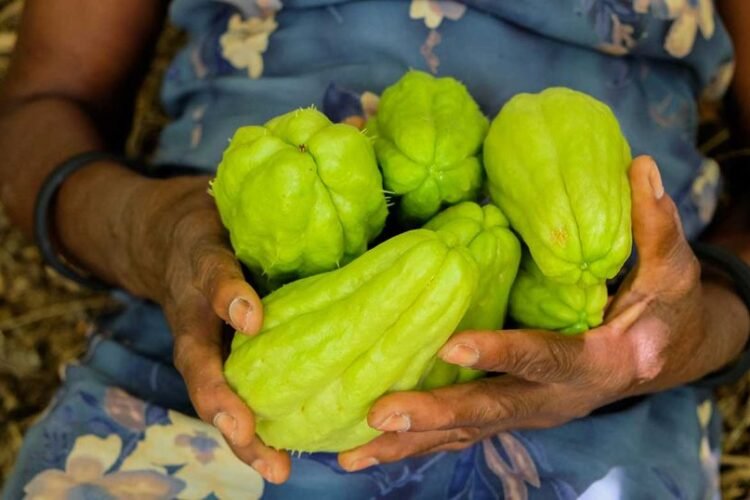
Chayote is a mild-flavored, pear-shaped squash belonging to the gourd family, prized worldwide for its crisp texture and versatility in kitchens ranging from Latin American to French and Asian cuisines.
History & Origins
Chayote was first cultivated by the indigenous peoples of Mesoamerica, particularly the Aztecs and Mayans, who valued it as a staple food crop. Following the Columbian exchange, Spanish colonizers introduced chayote to Europe, the Philippines, and other parts of Asia, where it became widely naturalized. The plant is unique among squashes because the entire fruit—including the seed—is typically eaten, and it can also be grown from the seeded fruit itself. Today, major producers include Mexico, Costa Rica, and parts of Southeast Asia.
Nutrition Facts
Per 100 g, edible portion (estimated)
- 19 kcalCalories
- 92 gWater
- 0.8 gProtein
- 0.1 gFat
- 0 gSaturated Fat
- 4.5 gCarbs
- 1.7 gFiber
- 1.7 gSugars
- 157 mgPotassium
- 13 mgCalcium
- 0.3 mgIron
- 12 mgMagnesium
- 7.7 mgVitamin C
- 0 mcgVitamin A
- 4.1 mcgVitamin K
- 36 mcgFolate
Culinary Uses
- Eaten raw in salads for its crisp, mildly sweet flesh
- Stir-fried or sautéed with garlic, onions, and spices
- Stuffed with meat or cheese and baked
- Added to soups, stews, and casseroles
- Pickled or preserved as a condiment
- Boiled and mashed as a side dish
- Fried as crispy chips or fritters
Known Benefits
- Low in calories and fat, suitable for weight management
- Good source of dietary fiber supporting digestive health
- Contains vitamin C for immune function support
- Provides potassium for heart health and blood pressure regulation
- Gluten-free and easily digestible for sensitive diets
Hidden Benefits
- Contains amino acids like cysteine that support liver detoxification
- Provides folate important for cell division and pregnancy health
- Contains antioxidant compounds including taurine
- Has mild diuretic properties in traditional medicine
- Contains inulin-type prebiotic fiber supporting gut microbiome
Cautions & Considerations
- May cause allergic reactions in individuals sensitive to other gourds
- Should be consumed in moderation by those with kidney issues due to potassium content
- Raw chayote contains compounds that may interfere with thyroid function if consumed in very large quantities
- The seed inside should be removed before cooking to prevent bitter taste
- Not recommended for individuals on specific low-oxalate diets without medical advice