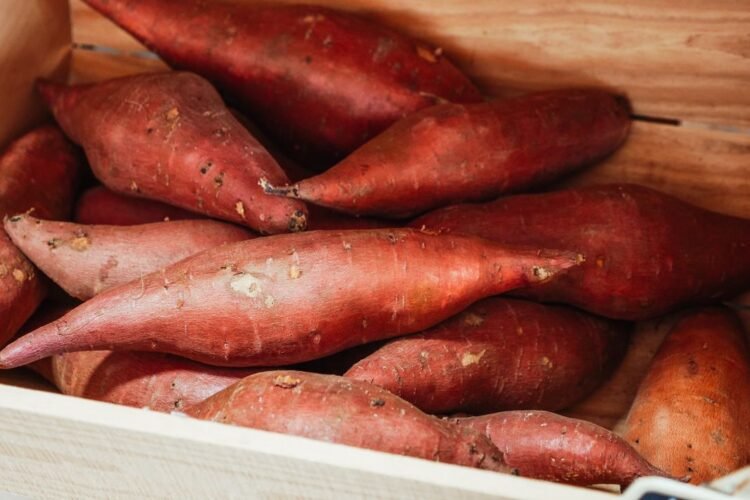
Sweet potato is a starchy, tuberous root vegetable prized worldwide for its sweet flavor, vibrant orange, purple, or white flesh, and exceptional nutritional profile rich in beta-carotene and fiber.
History & Origins
Sweet potato was first domesticated in Central or South America around 5,000-8,000 years ago, with archaeological evidence pointing to Peru and Mexico as early cultivation centers. Spanish traders introduced it to the Philippines, Southeast Asia, and eventually East Asia in the 16th century. It became a staple crop in Japan, China, and throughout the Pacific islands, where it adapted to diverse climates and cooking traditions. European colonizers brought it to Africa and other regions, where it now supports food security in many developing nations. The vegetable played a crucial role in preventing famines throughout history due to its hardiness and high yield.
Nutrition Facts
Per 100 g, edible portion (estimated)
- 86 kcalCalories
- 77 gWater
- 1.6 gProtein
- 0.1 gFat
- 0 gSaturated Fat
- 20 gCarbs
- 3 gFiber
- 4.2 gSugars
- 337 mgPotassium
- 30 mgCalcium
- 0.6 mgIron
- 25 mgMagnesium
- 2.4 mgVitamin C
- 709 mcgVitamin A
- 1.8 mcgVitamin K
- 11 mcgFolate
Culinary Uses
- Baked or roasted whole as a side dish
- Mashed with butter and spices
- Cut into fries and fried until crispy
- Added to stews, soups, and casseroles
- Steamed and added to salads
- Made into flour for gluten-free baking
- Pureed for soups and baby food
Known Benefits
- Rich source of vitamin A from beta-carotene, supporting eye health
- High in dietary fiber promoting digestive health
- Provides sustained energy from complex carbohydrates
- Contains antioxidants, especially in purple varieties
- Supports immune function through vitamin C content
Hidden Benefits
- Contains anthocyanins (purple varieties) with anti-inflammatory properties
- May support healthy gut microbiome through resistant starch
- Contains minerals like manganese important for bone health
- Low glycemic index varieties may benefit blood sugar management
Cautions & Considerations
- Contains oxalates which may aggravate kidney conditions in susceptible individuals
- Raw consumption may cause digestive discomfort due to resistant starch
- May interact with blood-thinning medications due to vitamin K content
- People with diabetes should monitor portions due to carbohydrate content