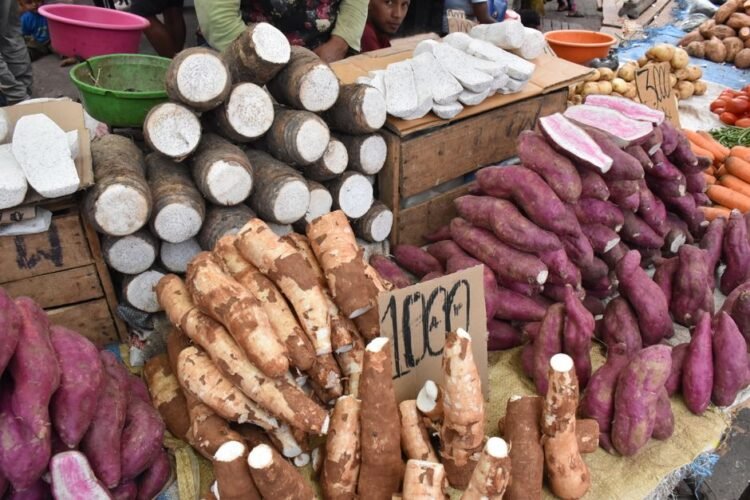
Yam refers to the starchy tuberous roots of various Dioscorea species, cultivated as a major staple food in tropical and subtropical regions worldwide. It is distinct from sweet potato despite often being conflated with it in North American markets, and serves as a primary source of dietary carbohydrate for millions of people.
CategoryStarches
Scientific nameDioscorea spp.
OriginWest Africa and Southeast Asia
History & Origins
Yams are among the oldest cultivated tuber crops, with archaeological evidence of domestication dating to 8000–10,000 years ago in West Africa, where the White Lagos and Yellow Gu yam species remain dietary staples. The crop spread through the slave trade to the Caribbean and the Americas, and independently in Southeast Asia where Dioscorea opposita (Chinese yam) was domesticated.
Nutrition Facts
Per 100 g, edible portion (estimated)
- 116 kcalCalories
- 1.5 gProtein
- 0.1 gFat
- 27.9 gCarbs
- 3.4 gFiber
- 0.5 gSugars
- 670 mgPotassium
- 11 mgVitamin C
- 6 mcgVitamin A
Culinary Uses
- Boiled, roasted, or fried as a side dish in West African cuisine
- Pounded into fufu, a thick pounded yam dumpling served with soups
- Sliced and deep-fried into yam fries in Caribbean and West African cooking
- Grated and baked into yam cakes or incorporated into porridges
Known Benefits
- High in potassium, supporting healthy blood pressure regulation
- Good source of dietary fiber, promoting digestive regularity
- Provides complex carbohydrates for sustained energy release
- Contains antioxidants including beta-carotene in orange-fleshed varieties
Hidden Benefits
- Resistant starch content increases with cooling after cooking, supporting gut microbiome health
- Contains diosgenin, a compound used in traditional medicine and steroid hormone research
- Lower glycemic index than white potato, producing a slower blood sugar rise
- Yields a flour used in gluten-free baking applications
Cautions & Considerations
- Should not be consumed raw, as raw yam contains diosgenin and other compounds that can cause digestive upset
- Contains oxalates which may contribute to kidney stone formation in susceptible individuals
- Yields from certain wild species can be toxic and require careful identification before consumption
- Drug interactions are possible due to diosgenin's effect on steroid metabolism