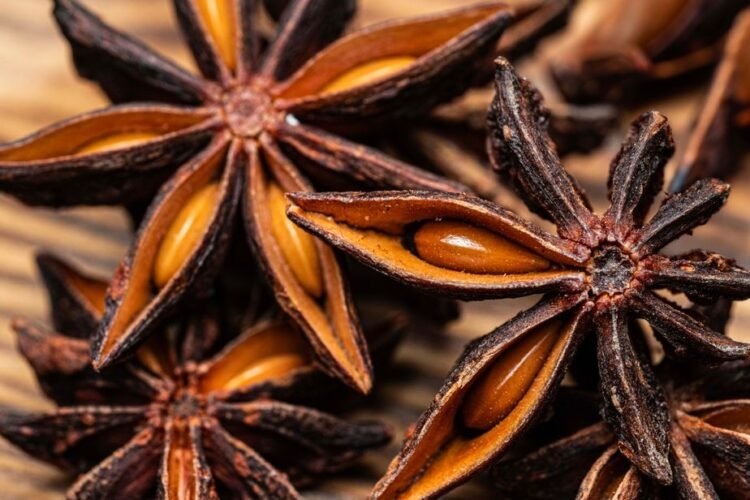
Star anise is the dried, star-shaped pericarp of the fruit of Illicium verum, an evergreen tree in the magnolia family cultivated primarily in southern China and northern Vietnam. Its intensely aromatic, sweet-licorice flavor comes from the volatile compound anethole and is foundational to Chinese five-spice powder, Vietnamese pho, and Indian garam masala blends.
History & Origins
Star anise has been used in China for at least three millennia, recorded in Han-dynasty herbal texts as both a culinary and medicinal ingredient. It entered European commerce through the Silk Road and was documented by the British East India Company in the late 18th century. Today, China produces roughly 80–90 percent of global supply, with most harvest concentrated in Guangxi and Yunnan provinces.
Nutrition Facts
Per 100 g, edible portion (estimated)
- 337 kcalCalories
- 17.6 gProtein
- 15.9 gFat
- 50.0 gCarbs
- 14.6 gFiber
- 0 gSugars
- 1441 mgPotassium
- 21 mgVitamin C
- 16 mcgVitamin A
Culinary Uses
- Key component of Chinese five-spice powder alongside clove, cinnamon, Sichuan pepper, and fennel
- Simmered whole in Vietnamese pho broth to perfume the long-simmered soup
- Ground into Indian garam masala and masala chai spice blends
- Infused into liqueurs such as sambuca, pastis, absinthe, and Chinese baijiu
Known Benefits
- Rich source of anethole, shikimic acid, and flavonoids
- Traditionally used to relieve digestive upset, bloating, and flatulence
- Used as a carminative and expectorant in traditional Chinese medicine
- Contains bioactive lignans with in-vitro antioxidant activity
Hidden Benefits
- Industrial extraction of shikimic acid from star anise pods is the starting point for synthesizing oseltamivir (Tamiflu)
- May exhibit mild estrogenic properties due to anethole metabolites such as anethole trithione
- Essential oil shows demonstrated in-vitro antimicrobial activity against several food-borne bacteria
Cautions & Considerations
- Japanese star anise (Illicium anisatum) is highly toxic and must never be ingested; only Illicium verum is food-grade
- Whole pods pose a choking hazard and should be removed before serving dishes to children
- Concentrated essential oil is neurotoxic in high doses and should not be ingested undiluted
- Individuals allergic to anethole or related Apiaceae compounds may experience reactions