 (No Ratings Yet)
 Loading...
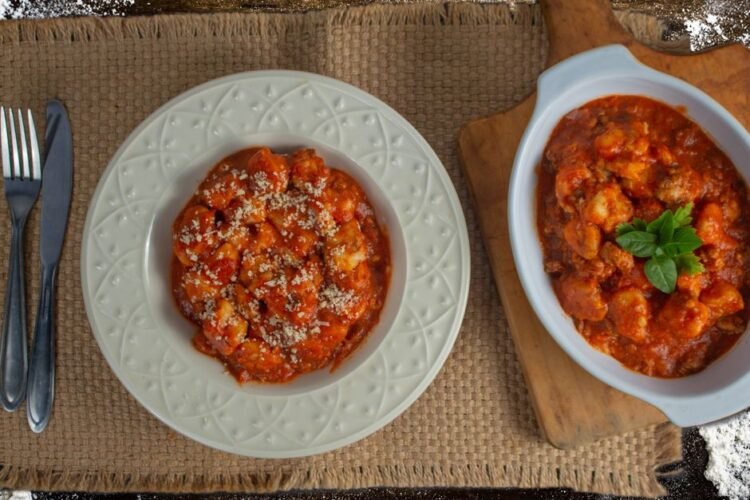
Light, pillowy potato gnocchi are the star of this rustic Italian classic, swimming in a bright, garlicky San Marzano tomato sauce finished with fresh basil and a snowfall of Parmesan. The gnocchi dough comes together in minutes and tastes worlds better than store-bought, especially when bathed in a simple sauce that lets each tender dumpling shine.
Prep Time30 mins
Cook Time60 mins
Total Time90 mins
Servings4
Yield4 servings
Nutrition Facts
Per serving (estimated)
- 510 kcalCalories
- 15 gFat
- 3.5 gSaturated Fat
- 82 gCarbs
- 6 gFiber
- 9 gSugar
- 14 gProtein
- 720 mgSodium
- 980 mgPotassium
- 180 mgCalcium
- 4.5 mgIron
- 22 mgVitamin C
- 95 mcgVitamin A
Ingredients
For the potato gnocchi
- 2 lbs (about 4 medium) russet potatoes
- 1 large egg, lightly beaten
- 1 tsp fine sea salt
- 1/4 tsp freshly grated nutmeg
- 1 to 1 1/2 cups all-purpose flour, plus more for dusting
For the pomodoro sauce
- 3 tbsp extra-virgin olive oil
- 4 garlic cloves, thinly sliced
- 1/4 tsp red pepper flakes
- 1 (28 oz) can San Marzano whole peeled tomatoes, crushed by hand
- 1 tsp kosher salt, plus more to taste
- 10 to 12 fresh basil leaves, plus more for serving
- 1/2 tsp sugar (optional, to balance acidity)
For serving
- 1/2 cup freshly grated Parmigiano-Reggiano
- Drizzle of good extra-virgin olive oil
- Flaky sea salt, to finish
Directions
- Preheat the oven to 400°F. Prick the potatoes all over with a fork, place them directly on the oven rack, and bake for 50 to 60 minutes, until a skewer slides through with no resistance and the skins are papery.
- While the potatoes bake, make the sauce. Warm the olive oil in a wide skillet over medium-low heat. Add the sliced garlic and red pepper flakes and cook gently for 2 to 3 minutes, until fragrant and just barely golden.
- Pour in the hand-crushed tomatoes with their juices, add the kosher salt and the sugar if using, and stir in the basil leaves. Bring to a gentle simmer and cook for 20 to 25 minutes, stirring occasionally, until the sauce thickens and tastes rich. Taste and adjust salt; keep warm over low heat.
- As soon as the potatoes are cool enough to handle, split them open and scoop the flesh through a ricer or fine-mesh sieve onto a lightly floured work surface. Spread the riced potatoes in an even layer and let them sit for 2 minutes to release steam.
- Gather the potatoes into a loose mound, sprinkle with the salt and nutmeg, and make a well in the center. Pour in the beaten egg and work it in gently with your fingertips. Add 1 cup of the flour and fold it in just until a soft, slightly sticky dough forms, adding more flour a tablespoon at a time only if needed.
- Divide the dough into 4 pieces. Roll each piece on a lightly floured surface into a rope about 3/4 inch thick, then cut into 1-inch pillows. Optionally roll each piece over the back of a fork or a gnocchi board to create ridges that catch the sauce. Transfer to a parchment-lined tray and dust lightly with flour.
- Bring a large pot of generously salted water to a gentle boil. Working in two batches, drop the gnocchi in and cook for 2 to 3 minutes; they are done when they float to the surface and look slightly puffed. Lift them out with a slotted spoon and transfer directly into the simmering pomodoro sauce.
- Toss the gnocchi gently in the sauce for about 30 seconds so they absorb the flavor. Divide among warm bowls, top with grated Parmesan, a drizzle of olive oil, torn basil, and a pinch of flaky sea salt. Serve immediately.
Cook’s Notes
- Use starchy, floury potatoes such as russets and bake them rather than boil—waterlogged spuds lead to gummy, dense gnocchi every time.
- Work the dough as little as possible. The more you knead, the more flour you will need to add, and the heavier the finished gnocchi will be.
- San Marzano tomatoes really do make a difference in a simple pomodoro; look for the DOP label on the can if you can find it.
- Freeze uncooked gnocchi in a single layer on a parchment-lined tray until firm, then bag them; cook straight from frozen, adding about 1 minute to the boiling time.
- If your gnocchi fall apart in the water the dough was too dry or under-floured; if they taste gummy, the dough was overworked or the potatoes were too wet.