 (No Ratings Yet)
 Loading...
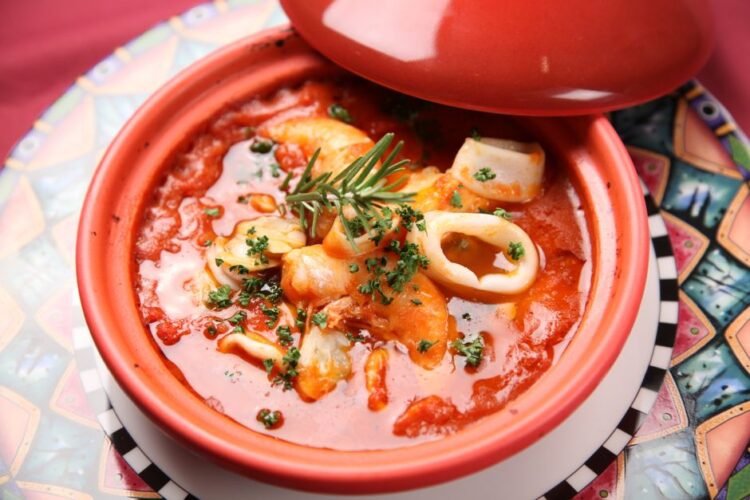
A signature dish from the Santa Lucia waterfront neighborhood of Naples, this humble yet elegant braise features a whole octopus slowly cooked in a garlicky tomato sauce with briny olives and capers. The result is meltingly tender octopus bathed in a rich, savory sauce that begs to be sopped up with crusty bread.
Prep Time15 mins
Cook Time70 mins
Total Time85 mins
Servings4
Yield4 servings
Nutrition Facts
Per serving (estimated)
- 330 kcalCalories
- 13 gFat
- 2 gSaturated Fat
- 12 gCarbs
- 3 gFiber
- 6 gSugar
- 32 gProtein
- 780 mgSodium
- 950 mgPotassium
- 120 mgCalcium
- 6 mgIron
- 22 mgVitamin C
- 80 mcgVitamin A
Ingredients
For the octopus
- 1 whole cleaned octopus, about 2.2 lbs (1 kg), fresh or thawed frozen
- 3 tbsp extra virgin olive oil
- 1 small dried peperoncino, crumbled
- 3 garlic cloves, thinly sliced
- 1/2 cup (120 ml) dry white wine
For the sauce and finishing
- 1 can (14 oz / 400 g) San Marzano whole peeled tomatoes, crushed by hand
- 1/3 cup (60 g) pitted Taggiasche or Gaeta olives
- 1 tbsp salted capers, thoroughly rinsed
- 1/2 tsp fine sea salt, plus more to taste
- Freshly ground black pepper
- 2 tbsp chopped fresh flat-leaf parsley
- 1 lemon, cut into wedges, for serving
Directions
- If using fresh octopus, rinse it well under cold water, remove the beak and the small internal sac behind the eyes, and pat dry. To tenderize, gently beat the thickest parts against a work surface 10 to 15 times. (Previously frozen octopus needs no tenderizing.)
- Bring a large pot of unsalted water to a gentle boil. Holding the octopus by the head, dip the tentacles in and out of the water 3 to 4 times until they curl, then submerge fully and blanch for 5 minutes. Drain and set aside.
- Heat the olive oil in a heavy Dutch oven or wide braising pan over medium heat. Add the garlic and peperoncino and cook for about 1 minute until fragrant but not browned. Add the octopus and sear, turning occasionally, for 4 to 5 minutes to lightly color the surface.
- Pour in the white wine and let it bubble and reduce by half, about 2 minutes. Add the crushed tomatoes, olives, capers, salt, and a few grinds of black pepper. Stir gently to combine.
- Bring the sauce to a simmer, cover with a tight-fitting lid, reduce the heat to low, and braise for 55 to 60 minutes, turning the octopus every 15 minutes. The octopus is ready when a knife slides easily into the thickest part of the head and the sauce has mellowed.
- Remove the lid, increase the heat to medium, and simmer uncovered for 7 to 10 minutes to thicken the sauce. Taste and adjust the salt.
- Transfer the octopus to a cutting board, let it rest for 5 minutes, then slice the tentacles into 2-inch pieces and cut the head into bite-sized portions.
- Arrange the octopus on a warm platter or shallow bowl, spoon the rich tomato sauce and olives over the top, scatter with the chopped parsley, and serve immediately with lemon wedges, boiled new potatoes, or toasted crusty bread.
Cook’s Notes
- Choose previously frozen and thawed octopus for the most reliably tender results without lengthy cooking; freezing naturally breaks down the muscle fibers.
- A heavy-bottomed Dutch oven or earthenware pot distributes heat gently, preventing the tomato sauce from scorching during the long braise.
- Authenticity matters with the olives: Taggiasche from Liguria or small black Gaeta olives from Lazio give the classic briny, mildly fruity flavor.
- The octopus is even better the next day. Refrigerate it in the sauce and gently reheat over low heat; the flavors deepen overnight.
- Serve with a chilled glass of Falanghina, Greco di Tufo, or a dry Vermentino to echo the coastal Neapolitan roots of the dish.