 (No Ratings Yet)
 Loading...
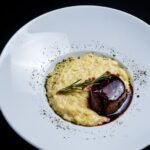
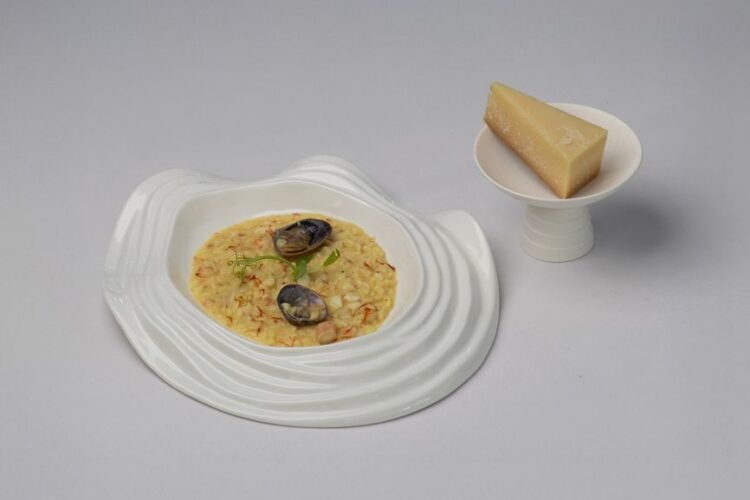
A Northern Italian classic from Lombardy, this saffron risotto is famous for its deep golden hue and luxuriously creamy texture. Slow-stirred Carnaroli rice is bloomed with saffron-infused stock, deglazed with white wine, and finished with cold butter and aged Parmigiano-Reggiano for that signature wave-like consistency called all'onda.
Prep Time10 mins
Cook Time30 mins
Total Time40 mins
Servings4
Yield4 generous main-course servings
Nutrition Facts
Per serving (estimated)
- 580 kcalCalories
- 22 gFat
- 11 gSaturated Fat
- 60 gCarbs
- 1 gFiber
- 2 gSugar
- 22 gProtein
- 780 mgSodium
- 300 mgPotassium
- 350 mgCalcium
- 2 mgIron
- 1 mgVitamin C
- 220 mcgVitamin A
Ingredients
For the Base
- 2 tablespoons unsalted butter
- 1 small shallot, finely minced (about 1/4 cup)
- 1.5 oz beef bone marrow, finely chopped (optional, traditional)
- 1.5 cups Carnaroli or Arborio rice
- 1/2 cup dry white wine, such as Pinot Grigio
For the Stock and Saffron
- 6 cups warm beef or veal stock, preferably homemade
- 1/4 teaspoon saffron threads (about a pinch)
- 1 teaspoon fine sea salt, plus more to taste
To Finish
- 3 tablespoons cold unsalted butter, cubed
- 1 cup finely grated Parmigiano-Reggiano (about 2.5 oz)
- Freshly ground black pepper, for serving
- Extra grated Parmigiano-Reggiano, for serving
Directions
- Bloom the saffron: Combine the saffron threads with 1/4 cup of the warm stock in a small bowl and let steep for at least 10 minutes to release the color and aroma.
- Sauté the aromatics: Heat 2 tablespoons butter in a wide, heavy-bottomed pan or Dutch oven over medium heat. Add the shallot and cook gently for 3 minutes until soft and translucent. Stir in the bone marrow, if using, and cook 1 minute more until melted.
- Toast the rice: Add the rice and stir constantly for 2 minutes, until the edges turn translucent and the grains feel warm and slightly chalky in the center.
- Deglaze with wine: Pour in the white wine and stir until it has been completely absorbed by the rice.
- Add stock gradually: Begin adding the warm stock one ladleful at a time (about 3/4 cup), stirring frequently but not constantly. Wait until each addition is almost fully absorbed before adding the next. After about 10 minutes of total cooking, stir in the saffron-infused stock and continue adding stock ladle by ladle until the rice is al dente, about 18 to 20 minutes total. Season with salt to taste partway through.
- Test for doneness: The rice should be tender with a slight bite in the center, and the consistency loose and flowing. It should ripple like a slow wave when you shake the pan; if it mounds stiffly, stir in a splash more stock.
- Mantecatura (the final emulsification): Remove the pan from the heat. Add the cold butter cubes and grated Parmigiano-Reggiano. Beat vigorously with a wooden spoon for 30 to 60 seconds until the risotto becomes creamy, glossy, and unified. Cover and let rest 1 minute.
- Plate and serve immediately in shallow warm bowls, finished with a generous crack of black pepper and a shower of extra Parmigiano-Reggiano.
Cook’s Notes
- Always keep your stock at a gentle simmer in a separate pot; cold stock will slow the cooking and prevent a creamy texture.
- Carnaroli rice is preferred in Milan for its higher starch content and firmer bite, but Arborio is a perfectly fine substitute.
- The brief, vigorous mantecatura step at the end is non-negotiable for an authentic creamy-yet-fluid finish.
- Risotto is famously paired with ossobuco (braised veal shanks) in the classic Milanese tradition.
- Leftover risotto can be chilled, shaped into balls, coated in breadcrumbs, and fried into golden arancini the next day.