 (No Ratings Yet)
 Loading...
Mizutaki is a refined Hakata chicken hot pot featuring a clear kombu-bonito broth simmered with bone-in chicken, napa cabbage, mushrooms, and tofu. The light, clean broth lets the chicken's natural sweetness shine, while crisp ponzu and creamy sesame dipping sauces complete every bite.
Prep Time20 mins
Cook Time30 mins
Total Time50 mins
Servings4
Yield4 servings
Nutrition Facts
Per serving (estimated)
- 430 kcalCalories
- 18 gFat
- 3.5 gSaturated Fat
- 22 gCarbs
- 5 gFiber
- 7 gSugar
- 44 gProtein
- 1180 mgSodium
- 980 mgPotassium
- 190 mgCalcium
- 3.6 mgIron
- 38 mgVitamin C
- 280 mcgVitamin A
Ingredients
For the kombu-bonito broth
- 4 cups cold water (about 1 L)
- 1 piece dried kombu (4 inches, 10 g)
- 1 cup loosely packed bonito flakes (katsuobushi, 15 g)
For the hot pot ingredients
- 1.5 lb bone-in chicken thighs, skin on (680 g), cut into 2-inch pieces
- 1/2 medium napa cabbage (about 1 lb / 450 g), cut into 2-inch pieces
- 6 oz fresh shiitake mushrooms, stems trimmed and caps scored
- 1 bundle enoki mushrooms (3.5 oz / 100 g), trimmed
- 1 cup shungiku (chrysanthemum greens) or baby spinach
- 1 large Japanese leek (negi), cut on a sharp bias into 1-inch pieces
- 1 medium carrot, peeled and thinly sliced on a diagonal
- 1 block soft tofu (14 oz / 400 g), drained and cut into 1-inch cubes
For the ponzu dipping sauce
- 1/3 cup soy sauce (80 ml)
- 3 tablespoons fresh yuzu or lemon juice (45 ml)
- 2 tablespoons mirin (30 ml)
- 2 tablespoons dashi (from the pot)
- 1 teaspoon rice vinegar
- 1 thinly sliced scallion
- 1 teaspoon grated daikon
For the sesame dipping sauce (goma-dare)
- 3 tablespoons toasted white sesame seeds, ground
- 1 tablespoon soy sauce
- 1 tablespoon mirin
- 1 tablespoon rice vinegar
- 1 teaspoon sugar
- 2 tablespoons dashi (from the pot)
Directions
- Prepare the broth by wiping the kombu with a damp cloth, then soaking it in the cold water for 20 minutes. Slowly heat over medium until small bubbles form at the edges (about 140°F); remove the kombu before the water boils.
- Bring the kombu water to a gentle boil, remove from heat, scatter the bonito flakes over the surface, and let them steep undisturbed for 2 minutes. Strain through a fine sieve or cheesecloth to yield a clear dashi; set aside.
- Arrange the hot pot ingredients on a large platter in separate piles: chicken pieces, napa cabbage, shiitake, enoki, shungiku, leek, carrot, and tofu. This makes table-side cooking easy and beautiful.
- Pour the strained dashi into a traditional donabe or heavy clay pot and bring to a gentle simmer over medium heat. Add the chicken pieces first and simmer for 6-8 minutes, skimming any foam, until just cooked through.
- Add the napa cabbage, carrot, and leek to the pot and simmer 3 minutes more. Add the shiitake, enoki, and tofu and cook 2-3 minutes until the cabbage is tender but still crisp and the mushrooms are just softened.
- Stir together both dipping sauces in small bowls: combine ponzu ingredients in one and sesame-dare ingredients in the other. Keep a small ladle nearby for skimming the broth between batches.
- To eat, each diner selects pieces from the simmering pot, dips generously into ponzu or sesame sauce, and enjoys. Once the chicken is mostly eaten, drop in the shungiku for the final 30 seconds of cooking; the greens wilt into the rich broth.
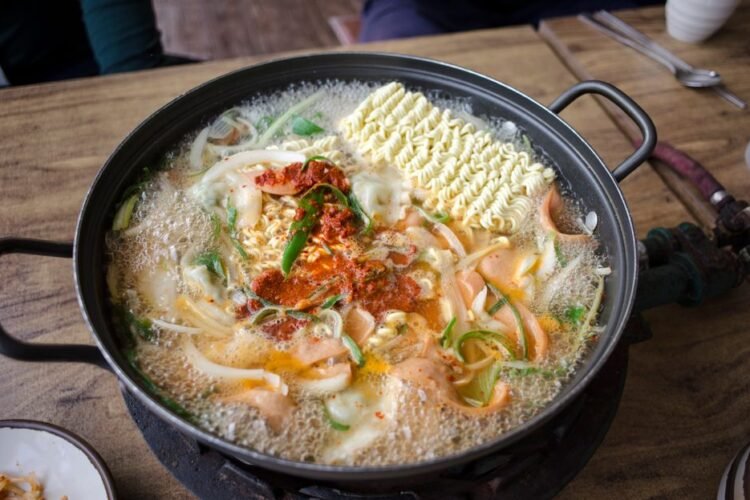
- Optional finishing course: serve the remaining flavorful broth over a bowl of hot cooked rice, swirl in a beaten egg, or add fresh ramen noodles for a satisfying hakata-style shime (finisher).
Cook’s Notes
- Always simmer mizutaki gently; a rolling boil makes the broth cloudy and toughens the chicken.
- Bone-in, skin-on chicken thighs deliver the richest flavor and traditional collagen-rich texture; avoid boneless breasts which dry out quickly.
- Make ponzu a day ahead so the citrus and soy marry into a rounder, more balanced dip.
- For an authentic Hakata touch, use chicken from a heritage breed or local free-range source if available.
- Add the shungiku (chrysanthemum greens) only at the very end; overcooking turns their delicate aroma bitter.