 (No Ratings Yet)
 Loading...
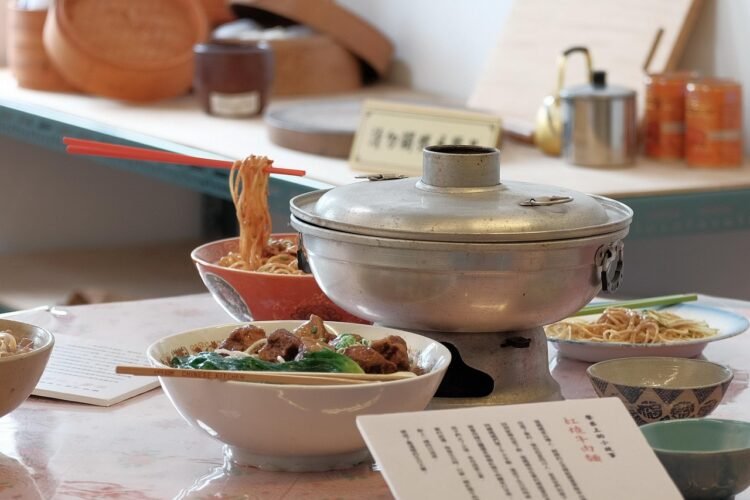
A comforting Japanese hot pot of thick wheat udon noodles simmered in a fragrant dashi broth with chicken, vegetables, and a softly poached egg, traditionally served bubbling hot in individual clay pots. This warming one-pot meal is perfect for cold winter evenings and brings the cozy charm of Japanese izakaya dining to your home table.
Prep Time20 mins
Cook Time25 mins
Total Time45 mins
Servings4
Yield4 servings
Nutrition Facts
Per serving (estimated)
- 525 kcalCalories
- 17 gFat
- 4 gSaturated Fat
- 58 gCarbs
- 4 gFiber
- 6 gSugar
- 32 gProtein
- 1180 mgSodium
- 720 mgPotassium
- 95 mgCalcium
- 4 mgIron
- 9 mgVitamin C
- 180 mcgVitamin A
Ingredients
For the dashi broth
- 4 cups kombu and bonito dashi stock
- 1/4 cup soy sauce
- 3 tablespoons mirin
- 2 tablespoons sake
- 1 teaspoon grated fresh ginger
- 1/2 teaspoon kosher salt
For the udon and proteins
- 4 portions (about 14 oz total) frozen or fresh udon noodles
- 8 oz boneless chicken thighs, sliced into bite-sized pieces
- 4 large eggs
- 8 pieces shrimp tempura (store-bought or homemade)
- 2 slices kamaboko fish cake, halved
For the vegetables and garnishes
- 4 fresh shiitake mushrooms, stemmed and scored
- 1 cup baby spinach leaves
- 1/2 cup snow peas, trimmed
- 1 medium carrot, cut into thin diagonal slices
- 4 green onions, sliced on the bias
- 2 tablespoons grated daikon radish
- 1 sheet nori, cut into thin strips
- Shichimi togarashi for serving
Directions
- In a large pot, combine dashi stock, soy sauce, mirin, sake, grated ginger, and salt. Bring to a gentle simmer over medium heat and let the flavors meld for 5 minutes, then reduce heat to keep warm.
- Bring a separate pot of water to a boil and cook the udon noodles according to package directions, usually 2-3 minutes for frozen udon. Drain well and divide the noodles among four individual donabe clay pots or oven-safe bowls.
- In a skillet over medium-high heat, sear the sliced chicken thighs for 3-4 minutes until lightly golden on the edges. The chicken will finish cooking in the broth, so it does not need to be fully cooked through at this stage.
- Arrange the seared chicken, shiitake mushrooms, snow peas, carrot slices, and kamaboko over the udon in each pot. Pour the hot dashi broth evenly over the ingredients, covering them by about three-quarters.
- Place the pots on a stovetop burner or in a 375°F oven and simmer gently for 6-8 minutes, until the chicken is cooked through and the vegetables are tender-crisp. Add the baby spinach during the last 2 minutes of cooking.
- Carefully crack one egg into the center of each pot, cover, and cook for 2-3 minutes until the egg white is just set but the yolk remains runny. Drape one piece of shrimp tempura over the edge of each pot to crisp slightly in the residual heat.
- Garnish each casserole with sliced green onions, grated daikon, and strips of nori. Serve immediately while bubbling hot, with shichimi togarashi on the side for extra warmth and spice.
Cook’s Notes
- Use frozen udon noodles for the best chewy texture and quickest preparation; they hold up better than dried udon in the hot broth.
- For a richer broth, swirl in 1 teaspoon of yuzu kosho or a small knob of butter per pot just before serving.
- If you do not have individual donabe pots, use deep oven-safe ceramic bowls and serve on a trivet to protect the table from heat.
- Do not overcook the egg; the traditional presentation features a runny yolk that enriches the broth when broken.
- Leftover broth can be strained and refrigerated for up to 3 days, then used as a base for a quick noodle soup the next day.