 (No Ratings Yet)
 Loading...
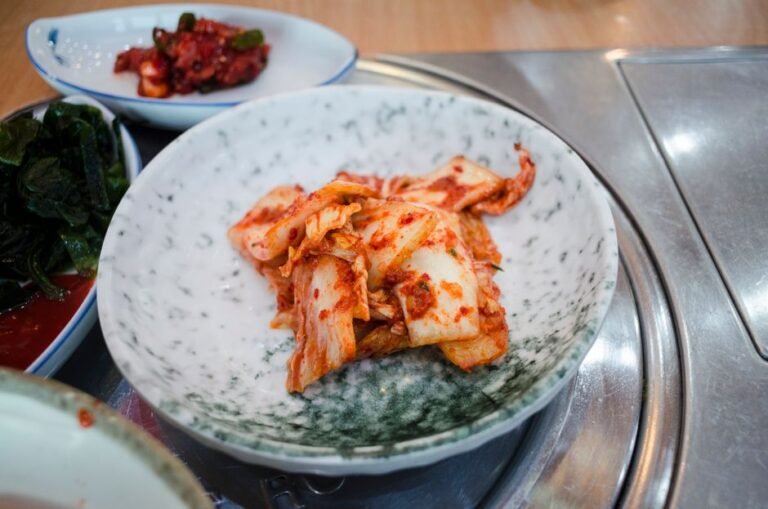
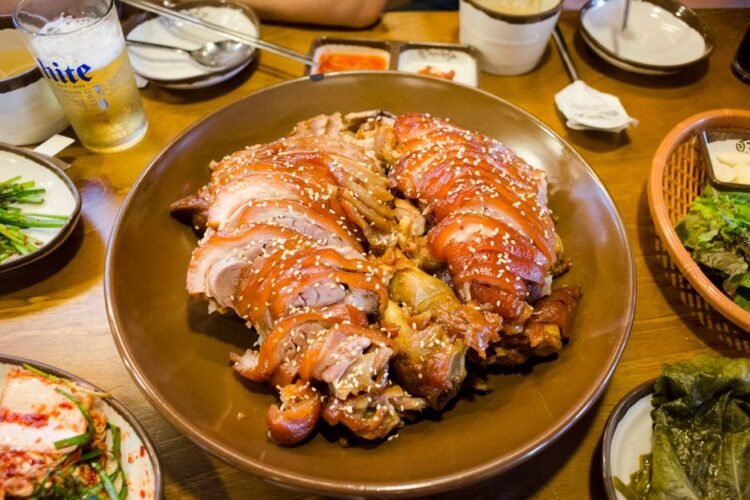
A long-simmered pork shoulder is pressed under weight to compact its fibers, then sliced paper-thin and wrapped in pungent aged kimchi. Served cool with a salty-sweet dipping sauce, this dish is a staple of the Korean bo ssam tradition and a popular pairing in Korean barbecue houses. The contrast of tender, lean pork with bright, fully fermented kimchi is what makes it irresistible.
Prep Time15 mins
Cook Time150 mins
Total Time165 mins
Servings4
Yield4 servings
Nutrition Facts
Per serving (estimated)
- 340 kcalCalories
- 16 gFat
- 5 gSaturated Fat
- 6 gCarbs
- 1 gFiber
- 3 gSugar
- 38 gProtein
- 920 mgSodium
- 480 mgPotassium
- 65 mgCalcium
- 2 mgIron
- 6 mgVitamin C
- 85 mcgVitamin A
Ingredients
For the pork and simmering liquid
- 2 lb (900 g) boneless pork shoulder, skin removed
- 1 large yellow onion, halved (skin on)
- 8 cloves garlic, smashed
- 1 in (2 cm) knob fresh ginger, sliced
- 4 scallions, tied into a knot
- 2 bay leaves
- 1 tsp whole black peppercorns
- 1 tbsp coarse salt
For the dipping sauce
- 3 tbsp soy sauce
- 1 tbsp rice vinegar
- 1 tbsp salted fermented shrimp (saeujeot), rinsed and chopped
- 1 tsp granulated sugar
- 1 tsp Korean gochugaru
- 1 tsp toasted sesame oil
- 1 tbsp finely minced scallion
For serving
- 8 large outer leaves well-aged napa cabbage kimchi
- 1 head baby romaine or red leaf lettuce, leaves separated
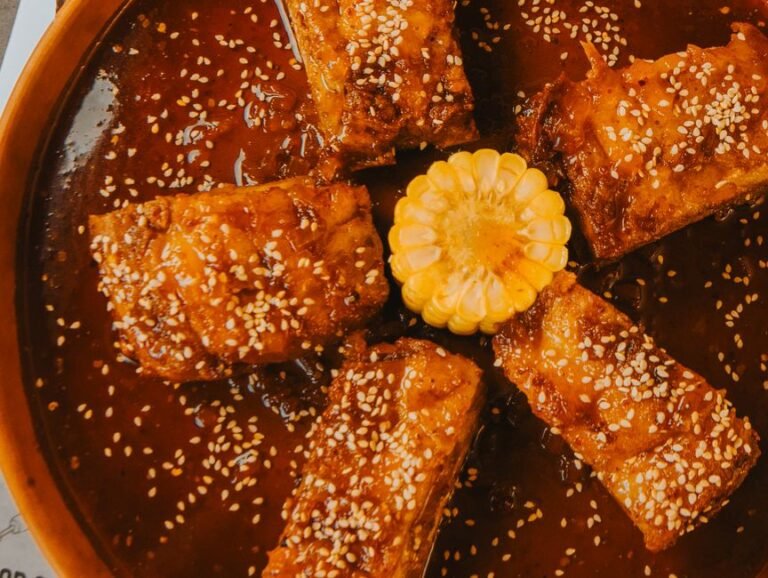
- 2 tbsp toasted sesame seeds
- Korean hot mustard (gyeoja) or wasabi, to taste
Directions
- Rinse the pork shoulder under cold water and place it in a large heavy-bottomed pot. Add enough cold water to cover the meat by at least 2 inches, then add the onion, garlic, ginger, scallions, bay leaves, peppercorns, and salt.
- Bring the pot to a full boil over high heat, skimming off any gray foam that rises to the surface. Reduce the heat to a gentle simmer, partially cover, and cook for 2 to 2 1/2 hours, or until a chopstick slides easily into the meat with no resistance.
- Lift the pork out and let it cool about 15 minutes until comfortable to handle. Pat dry with paper towels, then wrap tightly in two layers of plastic wrap, twisting the ends to seal.
- Place the wrapped pork on a rimmed sheet pan or between two cutting boards and top with a heavy weight such as a cast-iron skillet or a few canned goods. Refrigerate and press for at least 6 hours, ideally overnight, until completely firm and compacted.
- While the pork presses, make the dipping sauce: whisk the soy sauce, rice vinegar, mashed saeujeot, sugar, gochugaru, sesame oil, and scallion in a small bowl until the sugar dissolves. Stir in a dab of mustard if you want a sharp kick.
- Unwrap the pressed pork and use a long sharp knife or meat slicer to cut it across the grain into 1/8-inch-thick slices, wiping the blade between cuts to keep the slices clean.
- Lay each portion of pork onto a kimchi leaf, sprinkle with sesame seeds, and serve stacked on a platter with the dipping sauce and crisp lettuce leaves alongside for ssam-style wrapping.
Cook’s Notes
- Pork shoulder gives the cleanest pressed texture; pork belly is richer but tends to shred rather than slice thinly.
- Aged kimchi, at least 3 weeks old, is essential; young kimchi lacks the deep sour funk that defines the dish.
- Press the pork overnight for the most compact, sliceable results; rushing the press leads to crumbly edges.
- A meat slicer set to 3 mm creates the paper-thin cuts typical in Korean barbecue restaurants.
- Leftover slices keep 3 to 4 days refrigerated and are excellent dropped into cold noodle soup or tucked into gimbap.