 (No Ratings Yet)
 Loading...
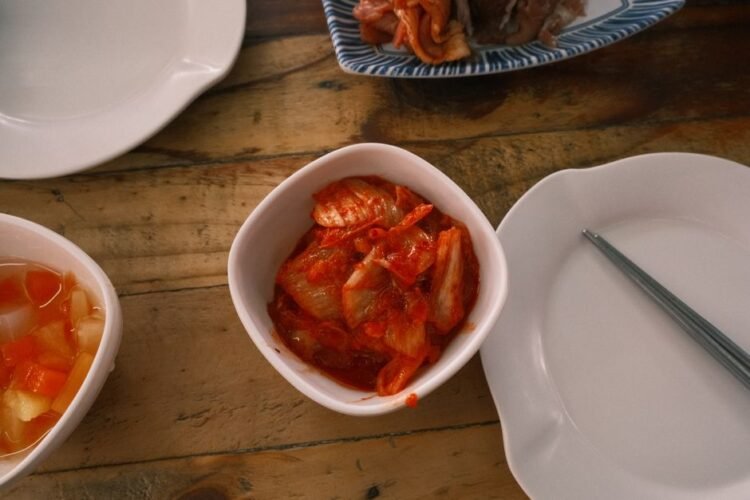
A traditional Korean staple, this napa cabbage kimchi is hand-seasoned with a bold, aromatic paste of garlic, ginger, and Korean red pepper flakes. Each leaf is layered with the spicy-sweet mixture, then left to ferment until tangy and deeply flavorful.
Prep Time45 mins
Cook Time10 mins
Total Time55 mins
Servings8
YieldAbout 2 quarts (8 cups)
Nutrition Facts
Per serving (estimated)
- 35 kcalCalories
- 0.5 gFat
- 0.1 gSaturated Fat
- 6 gCarbs
- 1.5 gFiber
- 2 gSugar
- 1.5 gProtein
- 620 mgSodium
- 170 mgPotassium
- 45 mgCalcium
- 0.8 mgIron
- 18 mgVitamin C
- 240 mcgVitamin A
Ingredients
For the cabbage
- 1 large head napa cabbage (about 3 lb)
- 1/2 cup Korean coarse sea salt
- 8 cups cold water
For the rice porridge binder
- 2 tablespoons sweet rice flour (chapssal-garu)
- 1 cup water
For the seasoning paste
- 1/2 cup Korean red pepper flakes (gochugaru, coarse grind)
- 1/2 pound Korean radish (mu), peeled and julienned
- 12 cloves garlic, minced
- 1 tablespoon fresh ginger, grated
- 1/4 cup fish sauce
- 2 tablespoons salted shrimp (saeujeot), rinsed and minced (optional)
- 2 tablespoons granulated sugar
- 1 bunch scallions, cut into 2-inch pieces
Directions
- Cut the cabbage lengthwise into quarters, leaving the cores attached at the base so the leaves stay together; place in a large bowl.
- Dissolve the salt in the cold water and pour over the cabbage, weighting the leaves down so they stay submerged; let stand at room temperature for 3 to 4 hours, turning every hour, until the leaves bend without snapping.
- Rinse the salted cabbage thoroughly under cold running water three times to remove excess salt, then drain cut-side down in a colander for 30 minutes.
- Meanwhile, make the porridge: whisk the sweet rice flour with 1 cup water in a small saucepan and cook over medium heat, stirring, until thick and translucent, about 5 minutes; let cool to room temperature.
- In a large mixing bowl, combine the cooled porridge with gochugaru, garlic, ginger, fish sauce, salted shrimp, and sugar; stir until smooth, then fold in the julienned radish and scallions.
- Working with one cabbage quarter at a time, gently spread the leaves apart and rub about 1/4 of the paste between every layer, from base to tip, taking care not to tear the leaves.
- Fold each quarter closed and place into a clean 2-quart glass jar or food-grade container, pressing down firmly to release trapped air bubbles and to keep the cabbage submerged under its own brine.
- Cover loosely with a lid and let ferment at cool room temperature (about 68 to 72°F) for 1 to 2 days until the kimchi tastes tangy and bubbles when tapped; transfer to the refrigerator to slow fermentation.
- Begin eating after 3 to 4 days in the refrigerator for a fresh, lightly fermented flavor, or wait 2 to 3 weeks for deeper, fully developed sour notes; kimchi keeps well refrigerated for several months.
Cook’s Notes
- Always use Korean coarse sea salt (kimchi salt) rather than iodized table salt, which can make the cabbage mushy and turn the paste cloudy.
- Adjust the amount of gochugaru to taste; for milder kimchi reduce to 1/3 cup, and for extra-spicy banchan use the full 1/2 cup plus 1 tablespoon of fine gochugaru.
- Taste a rinsed leaf before stuffing; it should taste pleasantly salty like seawater, not briny. If too salty, soak the quarters in fresh water for 20 minutes.
- Press the packed cabbage firmly so the brine rises above the leaves; exposed cabbage can develop surface mold during fermentation.
- Use a clean long-handled spoon every time you take kimchi out, and keep the jar rim wiped clean to extend shelf life beyond several months.