 (No Ratings Yet)
 Loading...
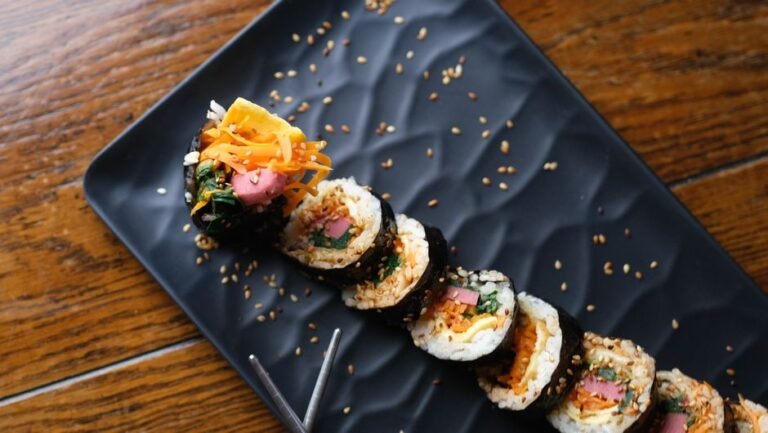
Spam Gimbap is a beloved Korean rice roll featuring sweet-savory glazed Spam alongside crisp vegetables, fluffy egg, and sesame-scented rice, all wrapped tightly in a sheet of roasted seaweed. It became a popular picnic and lunchbox staple in South Korea during the mid-20th century, when the salty-sweet combination of pan-seared Spam and tangy pickled radish proved irresistible. Sliced into bite-sized rounds, these rolls travel beautifully and make a satisfying handheld meal.
Prep Time20 mins
Cook Time25 mins
Total Time45 mins
Servings4
Yield4 rolls (about 24 pieces)
Nutrition Facts
Per serving (estimated)
- 380 kcalCalories
- 14 gFat
- 4 gSaturated Fat
- 48 gCarbs
- 3 gFiber
- 6 gSugar
- 14 gProtein
- 780 mgSodium
- 320 mgPotassium
- 75 mgCalcium
- 2 mgIron
- 8 mgVitamin C
- 280 mcgVitamin A
Ingredients
For the sesame rice
- 2 cups short-grain white rice (uncooked)
- 2 1/2 cups water
- 1 tablespoon toasted sesame oil
- 1/2 teaspoon fine sea salt
- 2 teaspoons toasted sesame seeds
For the Spam filling
- 1 can (340 g) Spam, cut into 8 thin slices
- 2 tablespoons soy sauce
- 1 tablespoon granulated sugar
- 1 tablespoon neutral oil
For the vegetable fillings
- 1 medium carrot, peeled and cut into matchsticks (about 1 cup)
- 4 ounces fresh spinach, trimmed
- 1/2 teaspoon toasted sesame oil
- 1/4 teaspoon salt
- 1/2 cup danmuji (yellow pickled radish), cut into long strips
- 1 large egg, beaten with 1/2 teaspoon water
For assembly
- 4 sheets of gim (roasted seaweed, full size)
- Perilla leaves or butter lettuce leaves, optional
- A small bowl of water for sealing the rolls
Directions
- Rinse the rice in cold water until the water runs clear, then combine with 2 1/2 cups water in a rice cooker or heavy pot. Once cooked, transfer to a wide bowl and gently fold in the sesame oil, salt, and toasted sesame seeds; let cool slightly until warm but comfortable to handle.
- While the rice cooks, prep the fillings. Lightly sauté the carrot matchsticks in a dry skillet over medium heat for 1 to 2 minutes until just tender, season with a pinch of salt, and set aside. Blanch the spinach for 30 seconds in boiling water, drain, squeeze out the excess moisture, then toss with the sesame oil and salt.
- Make the Spam glaze by stirring the soy sauce and sugar together. Heat the neutral oil in a skillet over medium-high heat, add the Spam slices, and pan-fry until lightly golden on both sides, about 2 minutes per side. Brush the soy-sugar mixture onto both sides of the Spam and cook another 30 seconds per side until caramelized; set aside.
- Cook the egg into a thin omelet: heat a small nonstick skillet over medium heat, pour in the beaten egg, and swirl to coat the bottom thinly. Once set, slide onto a cutting board and slice into 1/2-inch-wide strips.
- To assemble, lay a sheet of gim shiny-side up on a bamboo rolling mat (or a clean kitchen towel). Wet your fingers and spread about 3/4 cup of the seasoned rice evenly over the seaweed, leaving a 1-inch border along the top edge. Top with a perilla leaf (if using), then arrange 2 Spam slices, a row of carrot, a row of pickled radish, a row of egg strips, and a small bundle of spinach across the bottom third of the rice.
- Lift the bottom edge of the mat and roll forward, tucking the filling tightly. Press gently and continue rolling all the way to the exposed seaweed border. Moisten the bare seaweed with a damp fingertip to seal the roll; repeat with the remaining ingredients to make 4 rolls.
- Wipe a sharp knife with a damp cloth between each cut to slice each roll into 6 even pieces. Serve at room temperature with extra pickled radish on the side.
Cook’s Notes
- Keep a small bowl of salted water nearby and wet your fingers frequently so the seasoned rice never sticks to your hands.
- Avoid overfilling the rolls – tight, compact rolls hold their shape far better when sliced into rounds.
- Wipe your knife blade with a damp cloth between each cut for clean, neat slices that won't drag the filling out.
- Spam gimbap is traditionally eaten at room temperature, which makes it ideal for packed lunches, picnics, and hiking snacks.
- If danmuji (yellow pickled radish) is hard to find, substitute with mild pickled daikon strips or leave it out entirely.