 (No Ratings Yet)
 Loading...
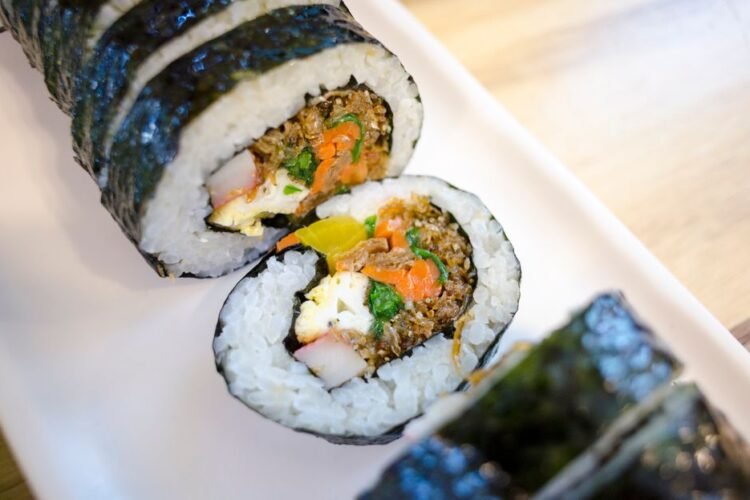
Tuna gimbap is a beloved Korean seaweed rice roll filled with creamy mayo-tuna, crisp pickled radish, and seasoned vegetables. Unlike generic gimbap, the tuna is the star, mixed with a touch of gochujang for gentle warmth. It's perfect for picnics, lunchboxes, and quick meals.
Prep Time30 mins
Cook Time20 mins
Total Time50 mins
Servings4
Yield4 rolls (about 24 pieces)
Nutrition Facts
Per serving (estimated)
- 545 kcalCalories
- 20 gFat
- 3.5 gSaturated Fat
- 62 gCarbs
- 4 gFiber
- 4 gSugar
- 28 gProtein
- 780 mgSodium
- 520 mgPotassium
- 120 mgCalcium
- 4 mgIron
- 6 mgVitamin C
- 280 mcgVitamin A
Ingredients
For the seasoned rice
- 2 cups short-grain Korean rice (about 3 cups cooked)
- 2 tablespoons toasted sesame oil
- 1 tablespoon soy sauce
- 1 teaspoon fine sea salt
- 1 teaspoon toasted sesame seeds
For the tuna filling
- 2 cans (140 g each) tuna in oil, drained
- 3 tablespoons Kewpie mayonnaise
- 1 tablespoon gochujang
- 1 teaspoon rice vinegar
- 1/2 teaspoon toasted sesame seeds
For the vegetables and egg
- 2 cups baby spinach
- 1 medium carrot, julienned
- 1 teaspoon toasted sesame oil, plus 1/2 teaspoon salt
- 1/2 teaspoon minced garlic
- 2 large eggs, beaten with pinch of salt
- 1/2 English cucumber, julienned
- 4 yellow pickled radish strips (danmuji), each about 15 cm
- 4 sheets of dried seaweed (gim/nori)
Directions
- Rinse the rice under cold water until it runs clear, then cook with the standard water ratio (about 1 1/4 cups water per 1 cup rice). While warm, gently fold in sesame oil, soy sauce, salt, and sesame seeds without mashing the grains, then cool to room temperature.
- Blanch the spinach for 30 seconds, shock in cold water, and squeeze dry. Chop roughly and toss with sesame oil, salt, and garlic. In a separate pan, stir-fry the carrot strips for 1 minute with a pinch of salt until just tender but still crisp; set aside to cool.
- In a bowl, combine drained tuna, mayonnaise, gochujang, rice vinegar, and sesame seeds. Mix until creamy and evenly tinted pink. Heat a small non-stick pan over medium-low, pour in the beaten eggs, and cook into a thin sheet; once cool, slice into 1/2-inch strips.
- Place a sheet of nori shiny-side down on a bamboo mat. Wet your hands and spread about 3/4 cup rice evenly over the bottom two-thirds of the sheet, leaving a 1-inch border at the top.
- Lay a strip of cucumber, pickled radish, carrot, spinach, and egg across the rice. Spoon a quarter of the tuna mixture in a thin line on top of the vegetables.
- Using the bamboo mat, lift the bottom edge over the filling and roll forward with gentle pressure. Wet the top nori border with a little water and press to seal. Repeat with remaining sheets.
- Lightly brush the rolls with sesame oil, then slice each into 6 even pieces with a sharp knife wiped clean between cuts. Serve at room temperature with extra gochujang or soy sauce.
Cook’s Notes
- A bamboo rolling mat (makisu) is essential for tight, even rolls; cover it with plastic wrap to keep rice from sticking.
- Wetting your knife between cuts gives clean slices without tearing the nori.
- For meal prep, keep rolls wrapped in plastic until ready to slice to prevent the rice from drying out.
- Swap the cucumber for perilla leaves if you want a more traditional herbal note.
- Store leftover rolls in the fridge for up to one day; the rice hardens, so bring them to room temperature before serving.