 (No Ratings Yet)
 Loading...
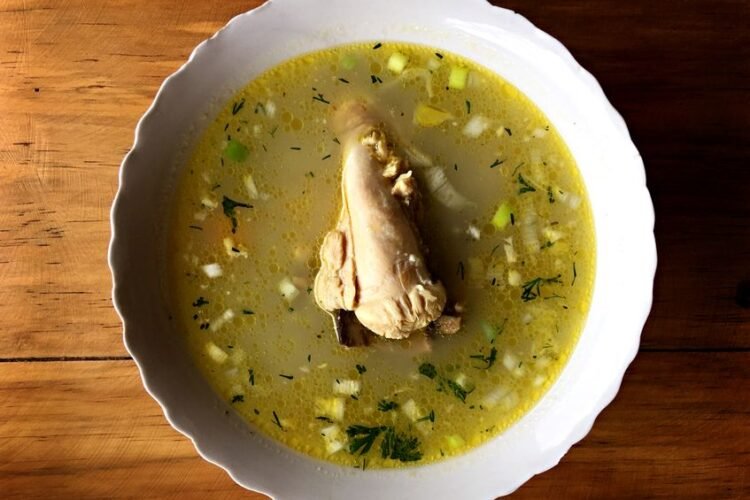
Poule au Pot is a beloved Burgundian classic in which a whole chicken is gently simmered with aromatic vegetables until tender. The fragrant broth is served as a first course, while the juicy chicken and vegetables follow as the main, traditionally accompanied by a creamy tarragon sauce.
Prep Time20 mins
Cook Time110 mins
Total Time130 mins
Servings6
Yield6 servings
Nutrition Facts
Per serving (estimated)
- 520 kcalCalories
- 24 gFat
- 8 gSaturated Fat
- 28 gCarbs
- 5 gFiber
- 7 gSugar
- 45 gProtein
- 780 mgSodium
- 950 mgPotassium
- 90 mgCalcium
- 3.2 mgIron
- 22 mgVitamin C
- 380 mcgVitamin A
Ingredients
For the chicken and broth
- 1 whole chicken (about 4 lb / 1.8 kg), preferably a mature hen
- 2 large leeks, trimmed, halved, and rinsed
- 3 large carrots, peeled and halved crosswise
- 3 stalks celery with leaves, halved
- 1 large yellow onion, peeled, with 4 whole cloves pressed into it
- 1 bouquet garni (parsley stems, 4 sprigs thyme, 2 bay leaves)
- 10 whole black peppercorns
- 2 tablespoons coarse sea salt, plus more to taste
For the accompanying vegetables
- 4 medium turnips, peeled and quartered
- 3 parsnips, peeled and cut into chunks
- 8 small Yukon Gold potatoes, peeled
- 2 carrots, peeled and cut into thick rounds
For the tarragon cream sauce
- 2 large egg yolks
- 1/2 cup heavy cream
- 2 tablespoons fresh lemon juice
- 1 tablespoon finely chopped fresh tarragon
- Pinch of freshly grated white pepper
To serve
- 2 cups cooked white rice or toasted country bread
- 12 cornichons, for garnish
- Flaky sea salt, for finishing
Directions
- Rinse the chicken inside and out under cold water and pat dry. Tuck the wing tips behind the back and tie the legs together neatly with kitchen twine so the bird holds its shape.
- Place the chicken in a large stockpot with the leeks, 3 carrots, celery, studded onion, bouquet garni, peppercorns, and 2 tablespoons salt. Pour in cold water to cover the chicken by about 1 inch (2.5 cm).
- Bring to a bare boil over medium-high heat, skimming any foam that rises. Reduce the heat to the gentlest possible simmer, partially cover, and cook for 1 hour, keeping the surface just trembling.
- Add the turnips, parsnips, potatoes, and remaining carrots to the pot. Continue simmering for 45 to 55 minutes more, until an instant-read thermometer inserted into the thigh reads 165°F (74°C) and the vegetables are fork-tender.
- Carefully lift the chicken onto a warm platter and arrange the cooked vegetables around it. Loosely tent with foil and let rest while you finish the broth and sauce.
- Strain the broth through a fine-mesh sieve into a large bowl or another pot, then skim off the surface fat. Taste and adjust with salt. Keep the broth piping hot for the first course.
- Make the tarragon sauce: whisk the egg yolks and cream in a medium bowl. Whisking constantly, slowly drizzle in about 1 cup of the hot broth to temper the yolks. Pour the mixture back into a small saucepan and cook over very low heat, whisking, until just thickened enough to coat the back of a spoon. Do not let it boil. Off the heat, whisk in the lemon juice, tarragon, and white pepper; season to taste.
- To serve, ladle the hot broth into warmed bowls as a first course, optionally with a slice of toasted bread floated on top. Carve the chicken and arrange with the vegetables on a large platter or individual plates.
- Pass the tarragon cream sauce, rice or bread, and cornichons at the table so everyone can build their own plate.
Cook’s Notes
- If you can find a true 'poule' (older laying hen) or stewing chicken, use it for a deeper, more gelatinous broth; otherwise choose the best-quality roasting chicken available.
- A pig's trotter or a small smoked ham hock added to the pot enriches the broth considerably and gives it that classic silky body.
- Never let the liquid boil once the chicken is in the pot, or the meat will turn tough and the broth cloudy.
- Strain and chill any leftover broth; it makes a sensational base for risotto, noodle soup, or a simple vegetable velouté the next day.
- The tarragon sauce must be cooked gently and never allowed to simmer, or the egg yolks will curdle.