 (No Ratings Yet)
 Loading...
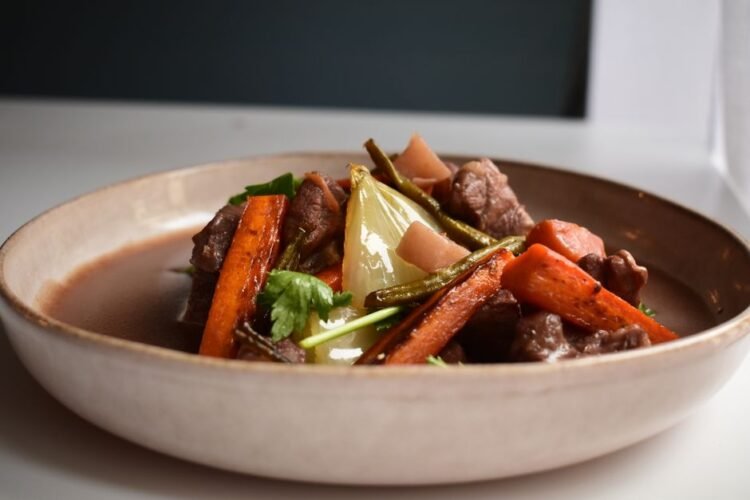
A beloved French classic, this rustic beef stew gently simmers for hours with marrow bones, leeks, and a bouquet of fresh herbs until the meat is fork-tender and the broth is richly flavored. Each component is cooked in stages so the vegetables keep their character while the beef turns silky.
Prep Time30 mins
Cook Time210 mins
Total Time240 mins
Servings6
Yield6 servings
Nutrition Facts
Per serving (estimated)
- 540 kcalCalories
- 22 gFat
- 8 gSaturated Fat
- 38 gCarbs
- 7 gFiber
- 9 gSugar
- 44 gProtein
- 820 mgSodium
- 1280 mgPotassium
- 115 mgCalcium
- 6 mgIron
- 38 mgVitamin C
- 860 mcgVitamin A
Ingredients
For the meat and broth
- 3 lb beef chuck roast, trimmed and tied into a single piece
- 1 lb beef shank with bone
- 1 beef marrow bone (optional)
- 2 quarts cold water
- 1 tbsp coarse sea salt
- 1 tsp whole black peppercorns
- 4 whole cloves
For the aromatics
- 2 large yellow onions, peeled (one studded with the cloves)
- 4 cloves garlic, lightly smashed
- 2 leeks, white and pale green parts, halved and rinsed
- 4 stalks celery, cut into chunks
- 1 bouquet garni (6 parsley stems, 4 sprigs thyme, 2 bay leaves)
For the vegetables
- 6 medium carrots, peeled and left whole
- 4 small turnips, peeled and quartered
- 6 medium Yukon Gold potatoes, peeled
- 2 parsnips, peeled and cut into 3-inch pieces
- 1 small green cabbage, cored and cut into 6 wedges
For serving
- Flaky sea salt, for the table
- Cornichons, drained
- Whole-grain Dijon mustard
- Fresh grated horseradish (optional)
Directions
- Place the chuck roast, beef shank, and marrow bone in a large heavy stockpot. Pour in the cold water and bring slowly to a boil over medium heat, skimming any foam that rises to the surface for the first 10 minutes.
- Add the sea salt, peppercorns, studded and plain onions, garlic, leeks, celery, and bouquet garni. Return to a gentle simmer, then reduce the heat so the liquid barely trembles. Continue skimming occasionally for the first hour.
- Simmer uncovered for 2 hours, adjusting the heat as needed to keep the liquid at a low quiver. Add hot water if the meat begins to peek above the broth.
- Add the carrots, turnips, parsnips, and potatoes to the pot and continue simmering gently for 45 minutes, until the root vegetables are nearly tender.
- Nestle the cabbage wedges into the liquid and simmer for another 20 to 25 minutes, until the cabbage is tender and the beef yields easily to a fork.
- Lift the meats and marrow bone onto a cutting board, cover loosely, and let rest for 10 minutes. Using a slotted spoon, transfer the vegetables to a warm serving platter.
- Strain the broth through a fine-mesh sieve into a separate pot, taste, and adjust the seasoning with additional salt if needed. Skim off excess fat or leave a thin layer for richness.
- Slice the chuck against the grain into thick pieces, pull the shank meat from the bone, and scrape the marrow from the bone. Arrange everything on the platter with the vegetables.
- Ladle the hot broth into warmed bowls and serve alongside the meat, vegetables, flaky salt, cornichons, mustard, and horseradish so each diner builds their own plate.
Cook’s Notes
- Start with cold water and bring it up slowly; this extracts more flavor and collagen from the bones for a silkier broth.
- A true pot-au-feu is gently simmered, never boiled, so the meat stays tender and the broth stays clear.
- Cook the vegetables in stages based on their density so each one finishes perfectly tender, not mushy.
- Save the strained broth and any leftover meat for a next-day soup with vermicelli or toasted baguette rubbed with garlic.
- Pot-au-feu is even better the next day; refrigerate the meat and broth separately and reheat gently to serve.