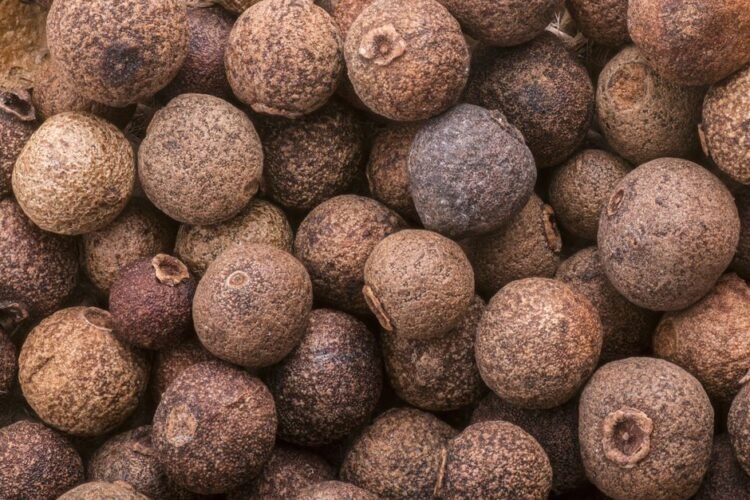
Allspice is the dried unripe berry of the Pimenta dioica tree, prized for its single spice that delivers notes of clove, cinnamon, nutmeg, and black pepper—hence its English name.
CategorySpices
Scientific namePimenta dioica
OriginJamaica and the Greater Antilles, Central America
History & Origins
Allspice was first documented by European explorers in the early 1600s in Jamaica, where the indigenous Taino people used it long before colonial contact. The Spanish conquistadors misidentified it as a form of pepper, which is reflected in its older common name, "pimento." By the mid-17th century it became a major export commodity of the British West Indies, and it remains one of Jamaica's most iconic agricultural products. Its essential oil, eugenol, was isolated and studied by European chemists in the 19th century.
Nutrition Facts
Per 100 g, edible portion (estimated)
- 60 kcalCalories
- 83 gWater
- 0.8 gProtein
- 0.4 gFat
- 0.1 gSaturated Fat
- 15 gCarbs
- 1.6 gFiber
- 14 gSugars
- 168 mgPotassium
- 11 mgCalcium
- 0.2 mgIron
- 10 mgMagnesium
- 36 mgVitamin C
- 54 mcgVitamin A
- 4 mcgVitamin K
- 43 mcgFolate
Culinary Uses
- Grinding whole dried berries into a spice rub for grilled meats and stews, especially Jamaican jerk seasoning
- Steeping whole berries in braising liquids for pork, goat, and game dishes
- Adding to baking spice blends for cakes, pies, and gingerbread
- Infusing in syrups and liqueurs such as allspice dram and rum-based cocktails
- Pickling vegetables and condiments where its warm, fruity aroma complements vinegar
Known Benefits
- Rich in eugenol, a natural antiseptic and anesthetic compound also found in clove
- Contains antioxidants that help neutralize free radicals and reduce oxidative stress
- Provides modest amounts of vitamin C, contributing to immune support
- Contains iron and calcium, supporting blood health and bone density
- Aids digestion; eugenol has been studied for its carminative and anti-inflammatory properties
Hidden Benefits
- The essential oil shows antimicrobial activity against certain foodborne pathogens including Escherichia coli and Salmonella
- Eugenol may inhibit melanin overproduction, showing potential in topical skin-brightening applications
- The spice contains quercetin and other flavonoids associated with reduced markers of cardiovascular inflammation
- Traditional Caribbean folk medicine used allspice poultices for muscle pain and arthritis, supported by modern anti-inflammatory research
- Contains gallic acid, a compound under investigation for its neuroprotective and anti-amyloid properties
Cautions & Considerations
- High eugenol content can cause gastric irritation when consumed in very large quantities
- Allspice oil should not be ingested undiluted; it can cause nausea, vomiting, and liver toxicity at concentrated doses
- Individuals with clove or bay leaf allergies may also react to allspice due to shared eugenol compounds
- Pregnant women should avoid therapeutic doses of allspice oil due to its uterine-stimulating properties
- Ground allspice loses potency quickly; stale spice may harbor mold and should be stored in airtight containers away from heat and light