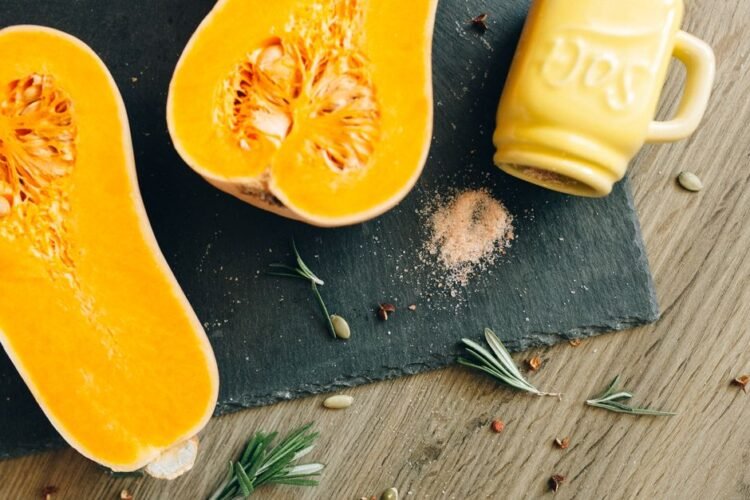
Butternut squash is a winter squash variety with a distinctive bell-shaped form, smooth beige skin, and vibrant orange flesh prized for its sweet, nutty flavor and versatile culinary applications.
History & Origins
Butternut squash was developed in the 1940s in Massachusetts by Charles Leggett, who crossed the gooseneck squash with the Dickinson squash to create this hybrid variety. Indigenous peoples of Mexico and Central America had cultivated its wild ancestors for over 5,000 years prior. The vegetable spread to Europe following Columbus voyages and became particularly popular in North American cuisine during the 20th century. Today it is grown commercially worldwide with major production in the United States, Mexico, India, and China.
Nutrition Facts
Per 100 g, edible portion (estimated)
- 45 kcalCalories
- 86 gWater
- 1 gProtein
- 0.1 gFat
- 0.02 gSaturated Fat
- 12 gCarbs
- 2 gFiber
- 5 gSugars
- 352 mgPotassium
- 48 mgCalcium
- 0.7 mgIron
- 34 mgMagnesium
- 21 mgVitamin C
- 532 mcgVitamin A
- 1.1 mcgVitamin K
- 27 mcgFolate
Culinary Uses
- Roasted and served as a side dish or in salads
- Pureed into soups and bisques
- Mashed as a healthier alternative to mashed potatoes
- Incorporated into pasta dishes, risottos, and casseroles
- Stuff halved squash with grains, meat, or vegetables and bake
- Prepared as butternut squash soup, often with cream or coconut milk
- Used in baked goods such as breads, muffins, and pies
- Cut into cubes and added to curries and stews
Known Benefits
- Excellent source of vitamin A (from beta-carotene) supporting eye health and immune function
- High in vitamin C which aids immune function and collagen synthesis
- Contains fiber promoting digestive health and satiety
- Provides potassium important for blood pressure regulation and heart health
- Low in calories making it suitable for weight management diets
Hidden Benefits
- Contains magnesium supporting bone health and energy production
- Provides manganese involved in metabolism and antioxidant defenses
- Contains choline important for liver function and nerve signaling
- Has folate necessary for cell division and DNA synthesis
- Contains tryptophan which may support mood regulation and sleep
Cautions & Considerations
- May cause allergic reactions in individuals sensitive to other cucurbits
- Contains oxalates which may need to be limited by those with kidney stones
- Can interact with blood-thinning medications due to vitamin K content
- Raw squash may be difficult to digest for some individuals
- Cross-reactivity possible with latex for those with latex allergies