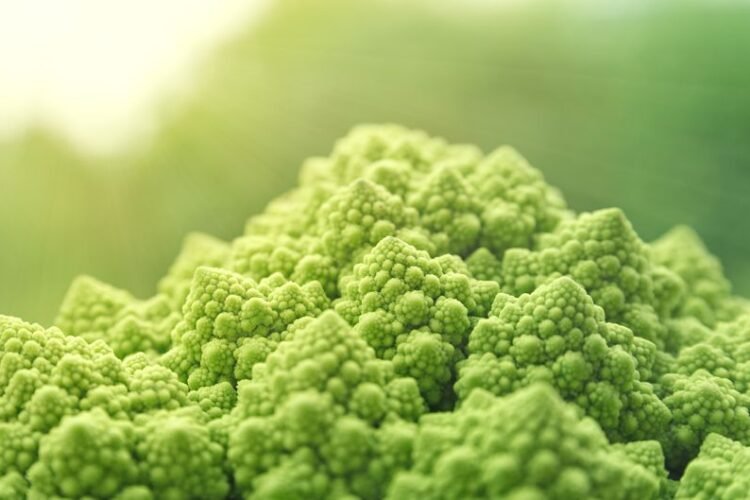
Romanesco is a striking edible flower bud of the species Brassica oleracea, featuring uniquely logarithmic spiral patterns and a mild, nutty flavor that falls between cauliflower and broccoli in taste.
History & Origins
Romanesco first appeared in historical records in northern Italy during the 16th century, though some agricultural historians argue it may have existed earlier in local markets. It remained a relatively obscure regional crop in Italy for centuries before gaining wider European attention in the early 20th century. The vegetable's distinctive fractal appearance captured mathematical interest, with researchers studying its self-similar spiral patterns as examples of natural fibonacci sequences. Commercial cultivation expanded globally during the 1990s as specialty produce markets grew.
Nutrition Facts
Per 100 g, edible portion (estimated)
- 25 kcalCalories
- 92 gWater
- 2.1 gProtein
- 0.3 gFat
- 0.1 gSaturated Fat
- 4.1 gCarbs
- 2 gFiber
- 1.7 gSugars
- 316 mgPotassium
- 25 mgCalcium
- 0.4 mgIron
- 18 mgMagnesium
- 48 mgVitamin C
- 12 mcgVitamin A
- 0.8 mcgVitamin K
- 60 mcgFolate
Culinary Uses
- Steamed or roasted as a side dish with olive oil and garlic
- Raw in salads for crunchy texture and mild flavor
- Pureed into soups for creamy consistency without dairy
- Roasted at high temperatures until caramelized and nutty
- Used as pizza topping in Italian-American cuisine
Known Benefits
- High in vitamin C supporting immune function
- Rich in dietary fiber promoting digestive health
- Contains antioxidants including carotenoids and flavonoids
- Low calorie vegetable suitable for weight management
- Good source of folate important for cell division
Hidden Benefits
- Contains glucosinolates linked to reduced cancer risk
- High in choline supporting brain health and memory
- Contains omega-3 fatty acids uncommon in vegetables
- Rich in phytonutrients with anti-inflammatory properties
- Contains vitamin K supporting bone metabolism
Cautions & Considerations
- May cause allergic reactions in individuals sensitive to Brassica vegetables
- Can cause flatulence due to raffinose content when consumed in large amounts
- Raw consumption may interfere with thyroid function due to goitrogens
- May trigger digestive discomfort in those with irritable bowel syndrome
- Cross-reactivity possible for individuals with mustard seed allergies