 (No Ratings Yet)
 Loading...
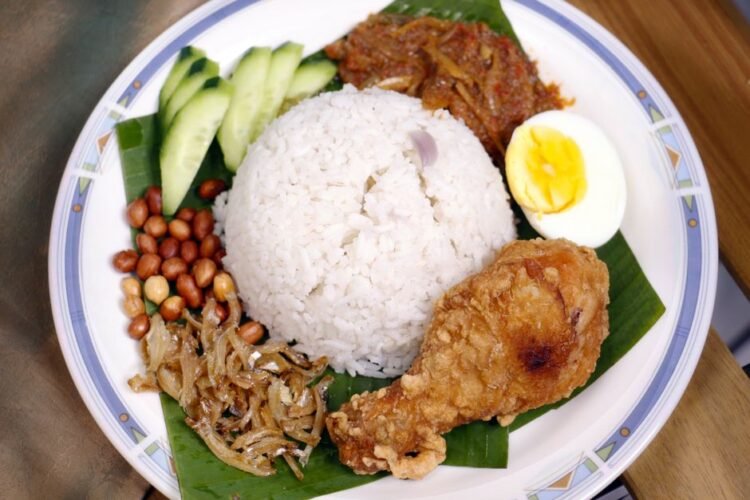
A fragrant coconut rice dish served with spicy sambal, crispy fried anchovies, roasted peanuts, and a soft-boiled egg. This beloved Malaysian breakfast plate delivers creamy herb-scented rice balanced with sweet heat, crunch, and freshness in every bite.
Prep Time20 mins
Cook Time35 mins
Total Time55 mins
Servings4
Yield4 servings
Nutrition Facts
Per serving (estimated)
- 640 kcalCalories
- 32 gFat
- 14 gSaturated Fat
- 62 gCarbs
- 4 gFiber
- 9 gSugar
- 24 gProtein
- 720 mgSodium
- 560 mgPotassium
- 120 mgCalcium
- 4 mgIron
- 18 mgVitamin C
- 210 mcgVitamin A
Ingredients
For the coconut rice
- 2 cups jasmine rice, rinsed and drained
- 1 cup full-fat coconut milk
- 1 1/2 cups water
- 2 pandan leaves, knotted
- 1 inch fresh ginger, lightly smashed
- 1 stalk lemongrass, bruised and tied
- 3/4 teaspoon fine sea salt
For the sambal
- 8 dried red chilies, soaked in hot water 15 minutes
- 4 shallots, peeled
- 3 garlic cloves
- 1 teaspoon shrimp paste (belacan), toasted
- 2 tablespoons tamarind paste mixed with 3 tablespoons water
- 1 tablespoon palm sugar or brown sugar
- 1/2 teaspoon salt
- 2 tablespoons vegetable oil
For the crispy anchovies and peanuts
- 1 cup dried ikan bilis (anchovies), cleaned
- 1/2 cup raw peanuts
- 2 cups vegetable oil, for frying
- 1/2 teaspoon sugar
For serving
- 4 large eggs
- 1 English cucumber, sliced
- Lime wedges
- Extra sambal, for the table
Directions
- Combine the rinsed rice, coconut milk, water, pandan leaves, ginger, lemongrass, and salt in a heavy saucepan. Bring to a gentle boil, then reduce heat to the lowest setting, cover tightly, and simmer 18 to 20 minutes until the liquid is absorbed and the rice is tender.
- Remove the pan from heat and let the rice rest, covered, for 10 minutes. Discard the pandan, ginger, and lemongrass, then fluff the rice gently with a fork and keep warm.
- While the rice cooks, make the sambal: drain the soaked chilies and blend them with the shallots, garlic, and toasted shrimp paste into a smooth paste. Heat the oil in a small skillet over medium heat and fry the paste 6 to 8 minutes, stirring often, until the oil begins to separate.
- Stir in the tamarind liquid, palm sugar, and salt, and simmer another 3 to 4 minutes until the sambal is thick, glossy, and deep red. Set aside.
- Heat the frying oil to 325°F in a wok or small pot. Fry the peanuts for about 90 seconds until golden, then remove and drain. Add the anchovies and fry 1 to 2 minutes until puffed and crisp, then drain on paper towels. Toss the peanuts and anchovies together with the sugar.
- Bring a small pot of water to a boil, lower the eggs in gently, and cook 7 minutes for jammy yolks. Cool in ice water, then peel and halve.
- Divide the warm coconut rice among four plates. Spoon a generous mound of sambal alongside, then add a portion of the crispy anchovy-peanut mixture, a halved egg, and several cucumber slices.
- Serve immediately with lime wedges and extra sambal on the side.
Cook’s Notes
- Toast the shrimp paste in a dry pan for 30 seconds before blending to deepen its umami flavor.
- Use jasmine or basmati rice for the fluffiest texture; long-grain varieties absorb the coconut milk without becoming sticky.
- Fry anchovies in small batches so the oil temperature stays high and they turn crisp rather than chewy.
- For a heartier plate, add fried chicken wings or beef rendang alongside the rice and sambal.
- Sambal keeps for up to a week refrigerated in a sealed jar and tastes even better after a day as the flavors meld.