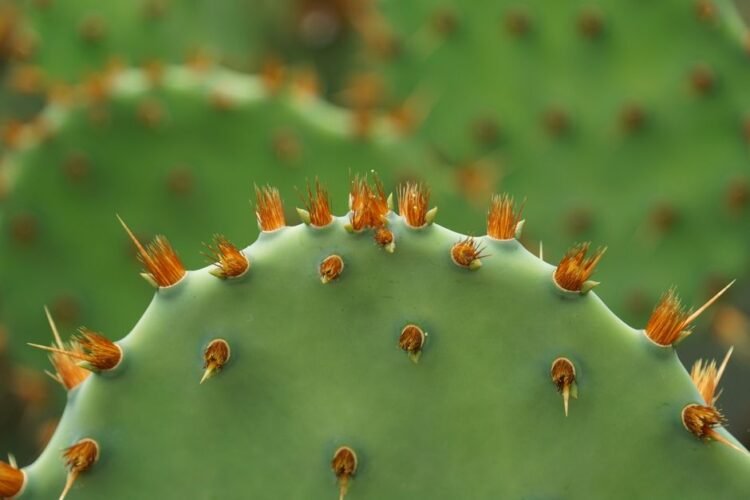
Nopal refers to the tender, young cladodes (pads) of the prickly pear cactus, Opuntia ficus-indica, consumed as a vegetable and long central to Mexican and broader Latin American cooking. Mild, slightly tart, and somewhat mucilaginous when cooked, nopal is prized for its nutritional density and versatility.
History & Origins
Archaeological evidence from caves in the Tehuacán Valley of Puebla indicates that Opuntia cacti were among the earliest plants consumed by humans in Mesoamerica, with macrobotanical remains dated to roughly 7,000–9,000 years ago. The Aztecs and earlier Nahua peoples cultivated nopales as a dietary staple, used the mucilage medicinally, and incorporated them into ritual life, as recorded in 16th-century codices and Spanish chronicles.
Nutrition Facts
Per 100 g, edible portion (estimated)
- 16 kcalCalories
- 1.3 gProtein
- 0.1 gFat
- 3.3 gCarbs
- 2.2 gFiber
- 1.1 gSugars
- 257 mgPotassium
- 164 mgCalcium
- 52 mgMagnesium
- 9.3 mgVitamin C
- 25 mcgVitamin A
Culinary Uses
- Grilled whole with salt and lime as nopales asados
- Diced and sautéed with onions, tomatoes, and chiles as a filling for huevos a la mexicana
- Boiled and chilled for ensalada de nopal with cilantro, queso fresco, and oregano
- Pickled in vinegar with carrots and jalapeños as a taco or tostada topping
Known Benefits
- Very low in calories and saturated fat
- High in dietary fiber, supporting satiety and digestion
- Notable source of calcium and magnesium for bone health
- Contains vitamin C and betalain antioxidants
Hidden Benefits
- Soluble mucilage and pectin may help moderate postprandial blood glucose response
- Betalain pigments (indicaxanthin, betanin) show anti-inflammatory activity in studies
- Prebiotic fiber fraction supports beneficial gut microbiota
Cautions & Considerations
- Spines and tiny glochids must be carefully removed or singed off before cooking
- Excess consumption can cause loose stools due to soluble fiber and mucilage
- Contains oxalates; individuals prone to calcium-oxalate stones should moderate intake
- Cooked texture becomes slimy, which some eaters find unfamiliar


