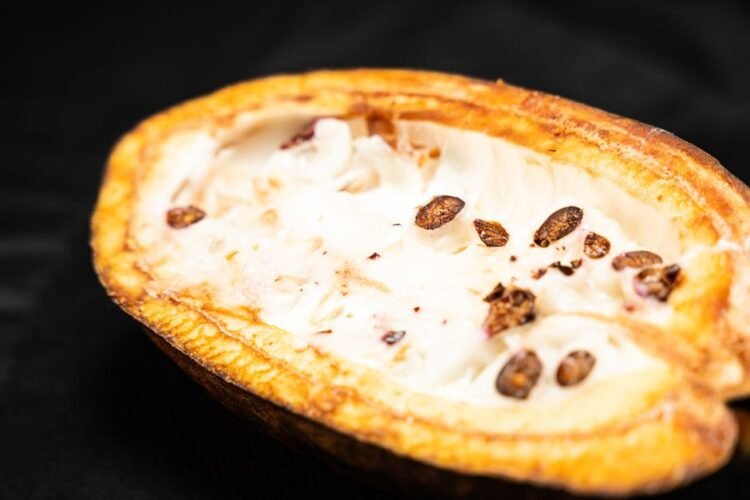
Cupuacu is a large, fragrant tropical fruit from the Brazilian Amazon, valued for its creamy, aromatic white pulp used in juices, ice creams, and as a close botanical cousin of cacao. It is commercially cultivated primarily in northern Brazil and exported as pulp, butter, and powder.
History & Origins
Cupuacu has been harvested from the wild and cultivated by indigenous Amazonian peoples for centuries, with pre-Columbian use documented across the lower Amazon basin. The species was formally described by the Portuguese naturalist Alexandre Rodrigues Ferreira in the late 18th century and entered commercial plantation cultivation in Pará and Amazonas states during the 1970s, becoming a flagship non-timber forest product of Brazil.
Nutrition Facts
Per 100 g, edible portion (estimated)
- 85 kcalCalories
- 1.5 gProtein
- 2.5 gFat
- 11 gCarbs
- 1.7 gFiber
- 8 gSugars
- 250 mgPotassium
- 13 mgCalcium
- 33 mgVitamin C
- 30 mcgVitamin A
Culinary Uses
- Blended into juices, smoothies, and batidos in northern Brazil
- Stirred into ice creams, mousses, and frozen pops (sorbet de cupuaçu)
- Used as a base for jams, jellies, and creamy desserts
- Pressed into cupuacu butter for chocolate-like confections known as cupulate
Known Benefits
- Naturally rich in vitamin C and B-complex vitamins
- Contains polyphenols and flavonoids with antioxidant activity
- Provides a balanced profile of oleic, stearic, and palmitic fatty acids
- Good source of dietary fiber supporting digestive health
Hidden Benefits
- Contains theacrine, a mild purine alkaloid related to caffeine that may support sustained alertness
- Aromatic esters (linalool, ocimene) contribute to mood-lifting sensory effects
- Phytosterols in the seed butter may have lipid-modulating potential
- Traditional use as a tonic for energy and recovery after illness
Cautions & Considerations
- Theacrine content may interact with MAOI medications and stimulant sensitivities
- Possible cross-reactivity in people with cacao or chocolate allergies
- High-calorie pulp and butter should be portioned in weight-management diets
- Unpasteurized pulp can harbor wild yeasts and spoil rapidly without refrigeration


