 (No Ratings Yet)
 Loading...
This deeply nourishing Korean beef bone soup features a long-simmered, milk-white broth enriched with collagen from beef leg and marrow bones. The clean, savory flavor is elevated by tender brisket, sweet daikon, and slender wheat noodles for a complete meal. Each bowl is finished with crisp scallions, fresh garlic, and a side of short-grain rice for the ultimate warming comfort dish.
Prep Time20 mins
Cook Time360 mins
Total Time380 mins
Servings4
Yield4 servings
Nutrition Facts
Per serving (estimated)
- 580 kcalCalories
- 22 gFat
- 8 gSaturated Fat
- 38 gCarbs
- 2 gFiber
- 4 gSugar
- 52 gProtein
- 720 mgSodium
- 980 mgPotassium
- 95 mgCalcium
- 6 mgIron
- 12 mgVitamin C
- 35 mcgVitamin A
Ingredients
For the broth
- 3 lb beef leg bones, cracked into 2-inch pieces
- 1 lb beef marrow bones, cut crosswise into 2-inch rounds
- 12 cups cold water, plus more as needed
- 1 large yellow onion, halved (skin on)
- 8 garlic cloves, lightly smashed
- 1 (3-inch) piece fresh ginger, sliced thickly
- 2 stalks celery, roughly chopped
- 1 tsp whole black peppercorns
For the meat and vegetables
- 1 lb beef brisket (flat cut)
- 1 lb daikon radish, peeled and cut into 1-inch pieces
- 2 tsp kosher salt, plus more to taste
For serving
- 8 oz somyeon (thin Korean wheat noodles), cooked and drained
- 4 scallions, thinly sliced on the bias
- 2 tbsp finely chopped fresh garlic
- 1 tsp freshly cracked black pepper
- 2 cups steamed short-grain white rice
- Flaky sea salt, for the table
Directions
- Place the beef leg bones and marrow bones in a large 8-quart stockpot, cover with cold water, and bring to a vigorous boil over high heat. Boil hard for 10 minutes to release impurities, then drain and rinse the bones thoroughly under cold running water; scrub the pot clean.
- Return the rinsed bones to the pot with 12 cups fresh cold water, the onion, smashed garlic, ginger, celery, and peppercorns. Slowly bring to a boil over medium-high heat, then immediately reduce to the gentlest possible simmer. Skim any gray foam that rises during the first 30 minutes, then partially cover.
- Maintain a bare, lazy simmer for 5 hours, checking every hour and adding hot water to keep the bones fully submerged. The broth should gradually turn opaque and milky white as collagen and marrow release into the liquid.
- Add the beef brisket to the pot and continue simmering for 1 hour, or until a paring knife slides easily into the meat. Lift out the brisket, cool slightly, and slice against the grain into 1/4-inch thick pieces; cover to keep warm.
- Strain the broth through a fine-mesh sieve into a clean pot, discarding the spent bones and aromatics. Bring the strained broth back to a simmer, add the daikon, and cook for 20 minutes until the radish is fork-tender and the broth is rich and creamy.
- Season the broth with the 2 teaspoons kosher salt, taste, and adjust; keep in mind diners will add more salt at the table. The finished broth should taste of deep beef and marrow, not heavily salted.
- Divide the cooked somyeon among 4 large warm bowls and arrange sliced brisket and a few pieces of daikon over the noodles. Ladle the piping hot milky broth over everything to warm the noodles through.
- Top each bowl with a generous shower of scallions, chopped raw garlic, and a heavy grind of black pepper. Serve immediately with steamed rice and a small dish of flaky sea salt for individual seasoning.
Cook’s Notes
- Ask your butcher to crack the leg bones and saw the marrow bones into thick rounds—exposed marrow and bone surface area are the keys to a deeply milky broth.
- For an even whiter, richer pot, soak the raw bones in cold water for 2 hours before parboiling; this draws out residual blood that would otherwise darken the finished soup.
- Never let the broth boil hard after the first parboil. A gentle, shivery simmer emulsifies the collagen properly; a rolling boil releases fat and creates a greasy texture.
- The broth tastes noticeably better on day two. Refrigerate overnight, lift off the solidified fat cap (reserve it for frying vegetables), and gently rewarm with the sliced brisket.
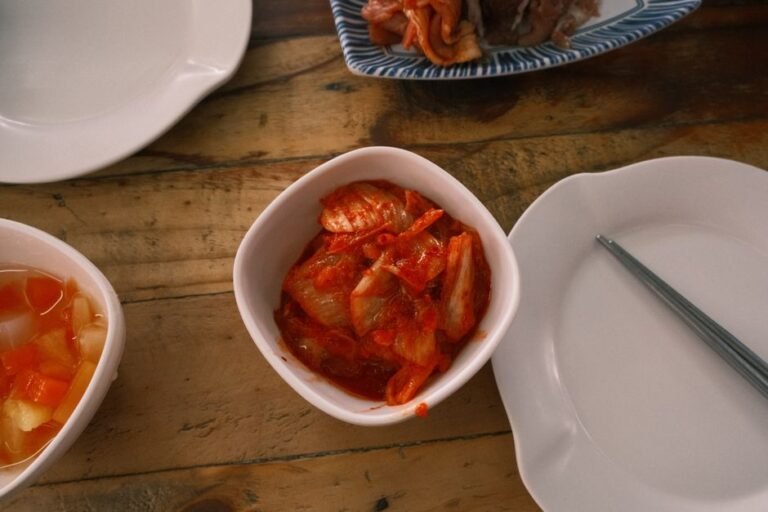
- Serve alongside kkakdugi (cubed radish kimchi) and a small dish of saeu-jeot (salted tiny shrimp) for authentic Korean table contrast—acid and umami against the rich, mellow broth.