 (No Ratings Yet)
 Loading...
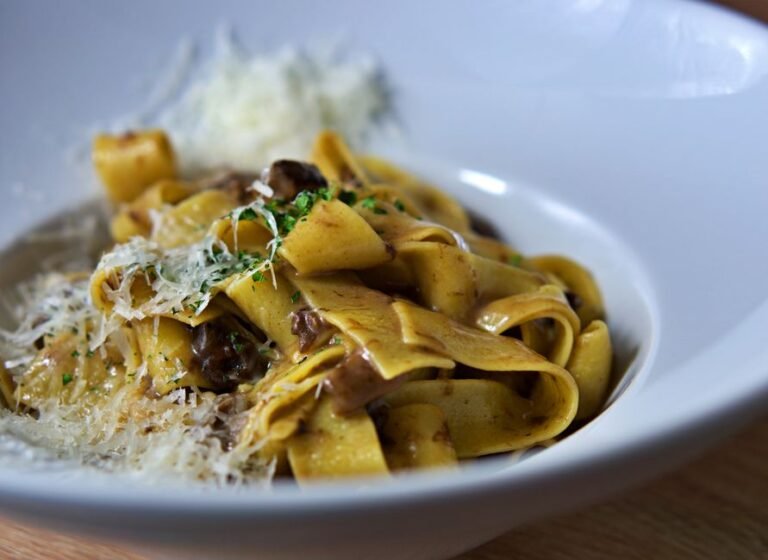
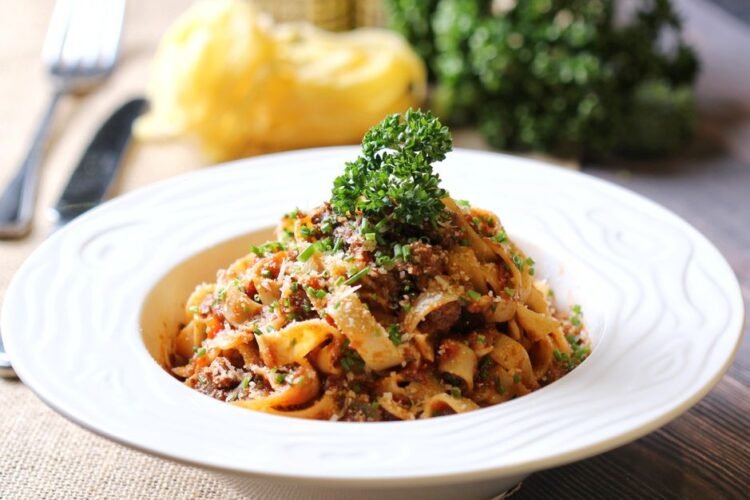
A faithful take on the classic ragù from Bologna: finely chopped soffritto, mixed beef and pork, white wine, tomato, and a splash of milk, simmered low until the sauce is glossy and deeply savory. Tossed with fresh egg tagliatelle and finished with a snowfall of Parmigiano-Reggiano, it is the Platonic ideal of an Italian Sunday supper.
Prep Time25 mins
Cook Time150 mins
Total Time175 mins
Servings4
Yield4 generous servings
Nutrition Facts
Per serving (estimated)
- 745 kcalCalories
- 34 gFat
- 13 gSaturated Fat
- 68 gCarbs
- 5 gFiber
- 9 gSugar
- 42 gProtein
- 820 mgSodium
- 980 mgPotassium
- 285 mgCalcium
- 5.5 mgIron
- 11 mgVitamin C
- 210 mcgVitamin A
Ingredients
For the soffritto and meats
- 3 tbsp olive oil
- 2 tbsp unsalted butter
- 1 medium yellow onion, finely diced (about 1 cup)
- 1 medium carrot, finely diced (about 3/4 cup)
- 1 celery stalk, finely diced (about 3/4 cup)
- 3 oz pancetta, finely minced
- 8 oz ground beef chuck (20% fat)
- 8 oz ground pork shoulder
For the braise
- 1 cup dry white wine
- 2 tbsp double-concentrated tomato paste
- 1 cup tomato passata
- 1 cup whole milk
- 1/2 cup beef stock
- 1 small bay leaf
- 1 pinch freshly grated nutmeg
- 1 tsp kosher salt, plus more to taste
- 1/2 tsp freshly ground black pepper
For finishing
- 12 oz fresh egg tagliatelle
- 3 tbsp unsalted butter
- 3/4 cup finely grated Parmigiano-Reggiano, plus more for serving
- 2 tbsp chopped flat-leaf parsley
Directions
- Heat the olive oil and butter in a heavy Dutch oven over medium-low heat. Add the onion, carrot, and celery and cook gently for 10 to 12 minutes, stirring often, until softened and translucent but not browned.
- Add the minced pancetta and cook for 3 minutes until its fat begins to render. Increase the heat to medium-high, add the ground beef and pork, and break the meat into small bits with a wooden spoon. Cook for 8 to 10 minutes until the liquid evaporates and the meat is lightly browned.
- Pour in the white wine and simmer for 4 to 5 minutes until almost completely reduced. Stir in the tomato paste and cook for 1 minute, then add the passata, milk, beef stock, bay leaf, nutmeg, salt, and pepper.
- Bring the sauce to a gentle simmer, then reduce the heat to the lowest setting so the surface barely trembles. Partially cover and cook for 2 to 2 1/2 hours, stirring every 20 to 30 minutes, until the ragù is thick, glossy, and richly browned. Remove the bay leaf and adjust the seasoning.
- About 10 minutes before serving, bring a large pot of generously salted water to a boil. Add the fresh tagliatelle and cook for 2 to 3 minutes until just al dente; dried tagliatelle will need 6 to 7 minutes.
- Meanwhile, warm the butter in a wide skillet over low heat. Reserve 1 cup of the ragù (thin with a splash of pasta water if needed) and add it to the skillet, keeping the rest warm.
- Drain the pasta, reserving 1/2 cup of cooking water. Add the pasta to the skillet with the ragù along with a splash of cooking water and toss vigorously for 30 seconds so every ribbon is coated.
- Divide the tagliatelle among warm bowls, spoon extra ragù on top, and finish with a generous shower of Parmigiano-Reggiano and a scatter of parsley. Serve immediately.
Cook’s Notes
- Authentic Bolognese uses a mix of beef and pork; the pork adds richness while the beef provides depth, so do not substitute one for the other.
- The splash of whole milk is traditional: its lactose gently tenderizes the meat proteins and gives the finished sauce its signature silky body.
- Keep the simmer truly low and slow. A rolling boil will toughen the meat and cause the milk to separate into greasy curds.
- Reserve extra ragù: it keeps for 4 days in the refrigerator and actually tastes better on day two, once the flavors have melded.
- Toss the pasta with butter and a splash of starchy cooking water before adding the sauce to help the ragù cling evenly to the ribbons.