 (No Ratings Yet)
 Loading...
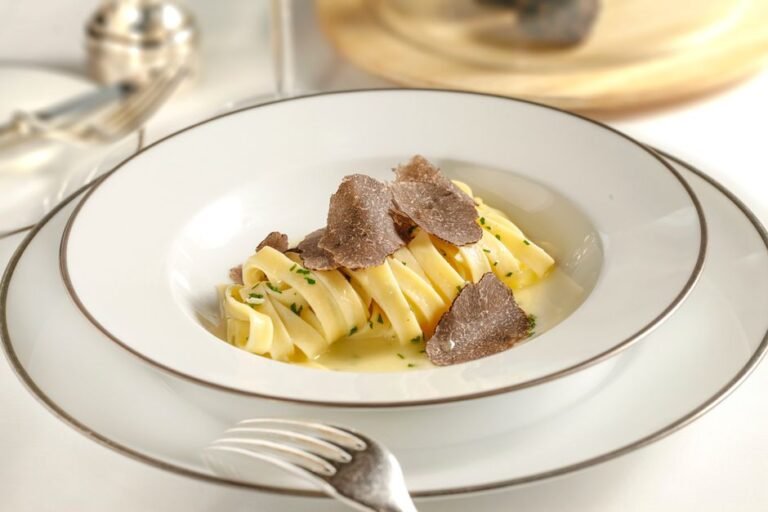
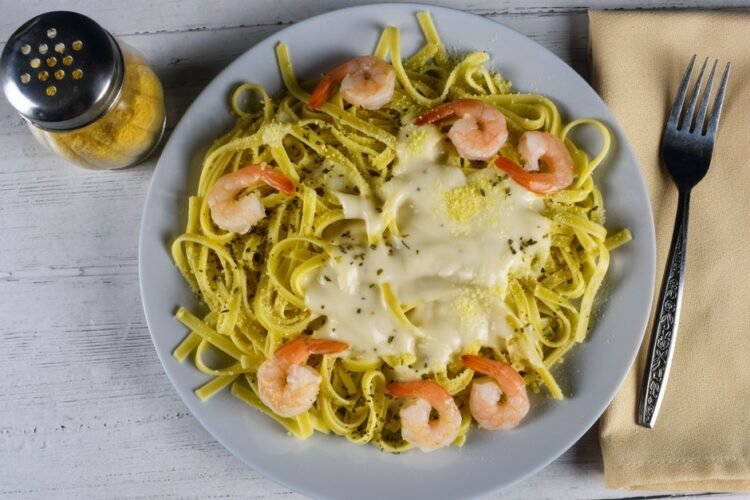
A silky Roman classic of warm fettuccine tossed with melted butter, freshly grated Parmigiano-Reggiano, and a splash of starchy pasta water to build a glossy emulsion. This is the dish Alfredo di Lelio first served at his restaurant on Via della Scrofa in 1914, refined here with a touch of cream for an extra-luxe finish.
Prep Time10 mins
Cook Time15 mins
Total Time25 mins
Servings4
Yield4 servings
Nutrition Facts
Per serving (estimated)
- 725 kcalCalories
- 42 gFat
- 24 gSaturated Fat
- 62 gCarbs
- 3 gFiber
- 3 gSugar
- 24 gProtein
- 640 mgSodium
- 260 mgPotassium
- 280 mgCalcium
- 2 mgIron
- 2 mgVitamin C
- 950 mcgVitamin A
Ingredients
For the pasta
- 12 oz (340 g) dried fettuccine or 1 lb (450 g) fresh fettuccine
- 2 tablespoons kosher salt, for the pasta water
For the Alfredo sauce
- 1/2 cup (115 g) unsalted European-style butter, cubed, plus 1 tablespoon cold for finishing
- 1/3 cup (80 ml) heavy cream
- 1 large garlic clove, finely grated on a microplane (optional)
- 1/8 teaspoon freshly grated nutmeg
- 3/4 cup (75 g) finely grated Parmigiano-Reggiano, plus extra for serving
- 1/2 teaspoon freshly cracked black pepper, plus more to taste
- 1/4 teaspoon kosher salt, to taste
For finishing
- 2 tablespoons chopped flat-leaf parsley
- Reserved hot pasta water, as needed
Directions
- Bring a wide pot of water to a rolling boil, add the 2 tablespoons of kosher salt, and taste it — it should taste like the sea.
- While the water heats, combine the cubed butter, cream, grated garlic, and nutmeg in a large warm skillet or shallow pan set over the lowest possible heat; stir gently until the butter is just melted and the mixture is warm, not bubbling.
- Drop the fettuccine into the boiling water and cook until al dente, about 8–10 minutes for dried or 2–3 minutes for fresh. Just before draining, reserve a full cup of the starchy cooking water.
- Drain the pasta and immediately add it to the skillet. Working quickly, sprinkle in one-third of the Parmigiano-Reggiano and toss vigorously with tongs, adding a splash of hot pasta water as needed to coax the cheese into a thick, glossy paste.
- Add the next third of cheese and continue tossing, splashing in more pasta water a tablespoon at a time; the sauce should loosen just enough to coat each strand without pooling at the bottom of the pan.
- Repeat with the remaining cheese, then season with the kosher salt and a generous grind of black pepper, tossing once more so the emulsion tightens and clings to the pasta. If the sauce seizes, add another splash of warm pasta water; if it loosens, increase the heat for 10 seconds to reduce.
- Divide the pasta among four warmed bowls, swirling it into nests with tongs. Top each portion with a few curls of cold butter, an extra shower of Parmigiano-Reggiano, a crack of pepper, and a sprinkle of parsley. Serve immediately — Alfredo waits for no one.
Cook’s Notes
- Always use a wedge of Parmigiano-Reggiano and grate it yourself — pre-shredded cheese contains anti-caking starch that will make the sauce grainy.
- The reserved pasta water is non-negotiable: its starches bind the butter and cheese into a true emulsion rather than a greasy pool.
- For the original Roman-style Alfredo, omit the cream entirely and double the Parmigiano-Reggiano; the dish was historically served to soothe a child's stomach.
- Serve on warmed plates so the sauce stays fluid from the first twirl to the last bite.