 (No Ratings Yet)
 Loading...
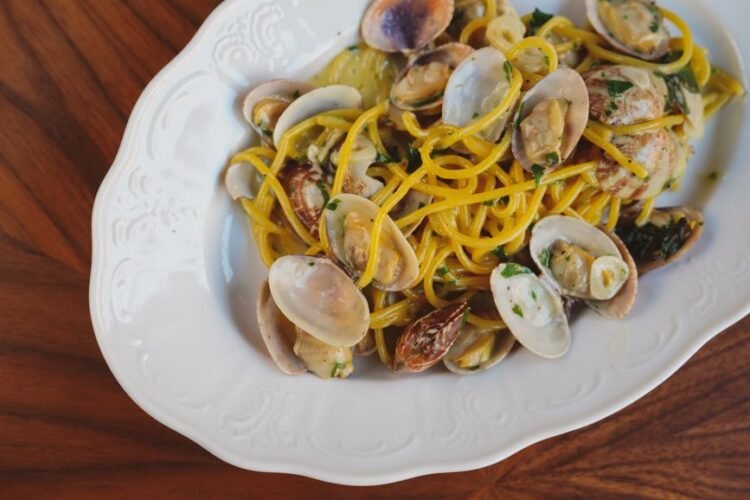
A timeless Neapolitan classic of briny littleneck clams tossed with spaghetti in a silky emulsion of good olive oil, dry white wine, garlic, and a generous handful of flat-leaf parsley. It comes together in the time it takes to boil a pot of pasta, relying entirely on the quality of a few simple ingredients.
Prep Time20 mins
Cook Time25 mins
Total Time45 mins
Servings4
Yield4 servings
Nutrition Facts
Per serving (estimated)
- 520 kcalCalories
- 16 gFat
- 2.5 gSaturated Fat
- 66 gCarbs
- 3 gFiber
- 2 gSugar
- 25 gProtein
- 610 mgSodium
- 430 mgPotassium
- 90 mgCalcium
- 14 mgIron
- 18 mgVitamin C
- 110 mcgVitamin A
Ingredients
For the clams and pasta
- 2 lb (about 1 kg) littleneck or Manila clams, scrubbed
- 2 tbsp coarse sea salt, for purging
- 1 lb (450 g) spaghetti or linguine
- 1 tbsp fine sea salt, for the pasta water
For the sauce
- 1/3 cup (80 ml) extra-virgin olive oil, plus more for finishing
- 4 to 5 garlic cloves, thinly sliced
- 1 small pinch red pepper flakes (optional)
- 1/3 cup (80 ml) dry white wine, such as Pinot Grigio or Falanghina
- 1/2 cup packed flat-leaf parsley, finely chopped
- Freshly ground black pepper
- Finely grated zest of 1 lemon (optional)
Directions
- Purge the clams: Combine the scrubbed clams with the 2 tablespoons coarse sea salt and 4 cups cold water in a bowl. Let them sit in a cool spot for 20 to 30 minutes so they release any sand, then lift them out (do not pour off, or sand resettles) and discard any that are cracked or remain open.
- Bring a large pot of water to a rolling boil, add the 1 tablespoon fine salt, and cook the spaghetti until it is just shy of al dente, about 1 minute less than the package directions. Reserve 1 cup of the starchy pasta water before draining.
- Meanwhile, warm the olive oil in a wide, deep skillet over medium heat. Add the sliced garlic and the red pepper flakes and cook gently, swirling often, until the garlic is pale golden and fragrant, about 2 to 3 minutes; do not let it brown.
- Pour in the white wine, bring it to a lively simmer for about 1 minute to cook off the harsh alcohol, then add the purged clams. Cover and cook, shaking the pan once or twice, until every clam has opened, 4 to 6 minutes. Discard any that refuse to open.
- Lift the opened clams out with tongs and set most of them in their shells into a warm bowl, removing and discarding the top shell of each; leave a handful fully shelled so the meat folds into the sauce. Strain the pan liquid through a fine-mesh sieve and return it to the skillet.
- Add the drained pasta to the skillet along with the chopped parsley and about 1/2 cup of the reserved pasta water. Toss vigorously over medium heat for 1 to 2 minutes so the starch emulsifies with the pan liquid, creating a glossy sauce that clings to each strand; add more pasta water a splash at a time if needed.
- Off the heat, tumble in the reserved clams along with any juices from the bowl, a generous crack of black pepper, and the lemon zest if using. Finish with a final drizzle of olive oil and give one last toss.
- Divide among warmed shallow bowls, spooning any extra sauce over the top, and serve immediately with extra parsley on the side.
Cook’s Notes
- Always purge clams in cold salted water and lift them out rather than pouring, otherwise sand resettles on the meat and ruins the sauce.
- A dry, crisp Italian white such as Falanghina, Vermentino, or Soave is traditional and complements the briny clam liquor far better than anything sweet or oaky.
- Reserving and using the starchy pasta water is essential: it is the starch that turns a thin pan liquid into a silky, restaurant-style emulsion that coats the spaghetti.
- For an even more luxurious version, replace half the olive oil with 3 tablespoons of cold unsalted butter whisked in at the end off the heat, Neapolitan trattoria style.
- Never add cheese to clams; the briny seafood and dairy fight each other, and purists in Naples will politely (or not so politely) send it back.