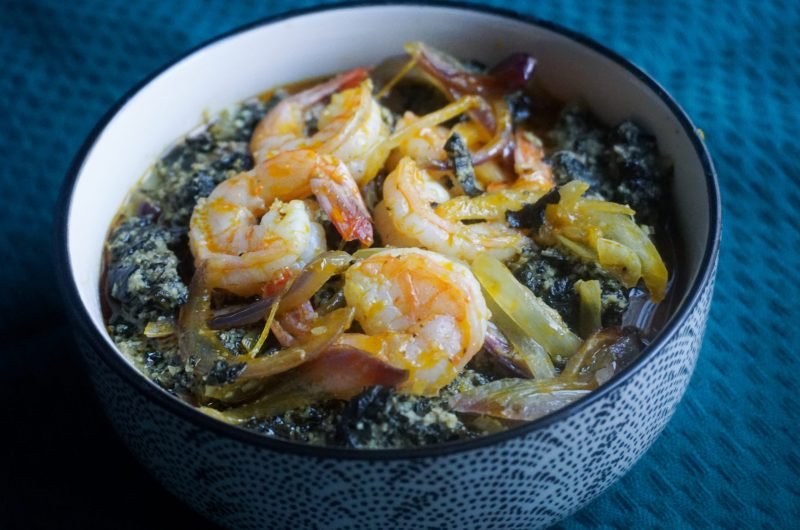
When it comes to Cameroonian cuisine, only one dish manages to capture the entire cultural richness of Cameroon in a single bite: Ndolè. This national dish, deeply rooted in Cameroonian traditions, is much more than a simple recipe — it’s a family ritual, a symbol of hospitality, and a gastronomic experience that leaves an indelible mark.
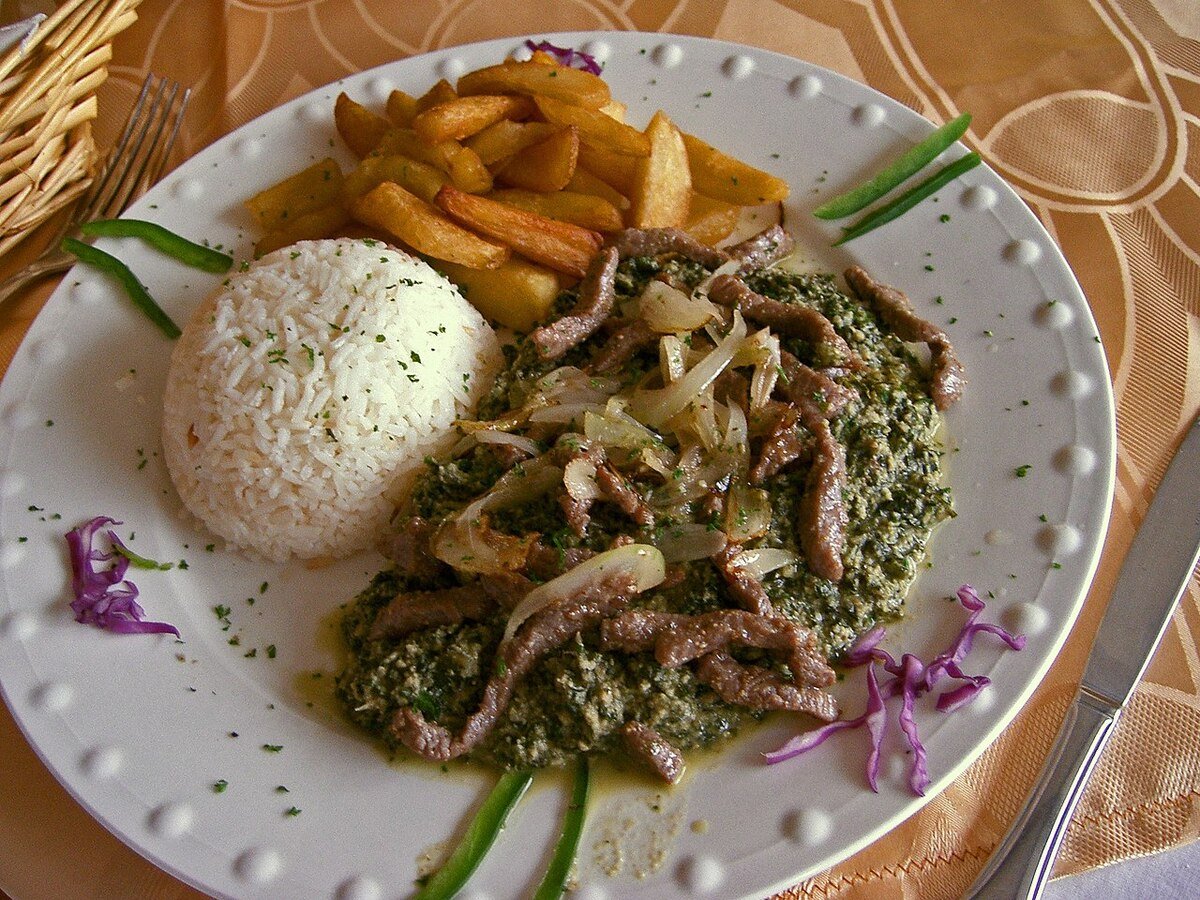
Photo: Wikimedia Commons (CC BY-SA)
In Africa, Ndolè is made with bitter leaves, ground peanuts, and spices, and is served on special occasions. Discover more traditional Cameroonian dishes on Foodish Nation.
What Is Ndolè?
Ndolè (sometimes spelled Ndolé or Ndole) is a Cameroonian stew made with bitter leaves, ground peanuts, and meat or fish, slowly simmered in a sauce fragrant with spices and aromatics. Contrary to what many think, it’s not simply a “soup” — it’s a complete, rich, layered dish where every bite reveals a new nuance of flavor.
Ndolè is typically served with plantain foutou (boiled and pounded plantains), rice, mion mion (cassava balls), or mbani (fish stock). Across Cameroon, from the streets of Douala to the markets of Bamenda, Ndolè is the dish prepared for special occasions: weddings, funerals, diaspora homecomings, and Sunday family gatherings.
The History and Cultural Significance of Ndolè
For the Bassa and Duala peoples of the coastal regions, Ndolè is an ancestral dish served during traditional ceremonies. For the Bamileke of the Western region, it represents prosperity and hospitality.
What makes Ndolè particularly fascinating is the preparation process for the bitter leaves (ndoleh in the local language). These leaves, from the Vernonia amygdalina plant, are naturally extremely bitter. Preparing them for Ndolè requires a repeated washing and kneading process — you rub them between your palms until the rinse water turns white. This laborious work is what makes Ndolè truly a special occasion dish: no one undertakes this process for an ordinary meal.
“When Ndolè is on the menu, we know special guests are coming.” — Testimony of a Cameroonian cook
Authentic Ndolè Ingredients
Bitter Leaves (Ndoleh)
Ndoleh leaves (Vernonia amygdalina) are the signature ingredient of Ndolè. They grow in West and Central Africa and are known for their exceptional medicinal properties. The “sweet” variety is preferred as it’s less intense while still retaining that characteristic flavor.
Possible substitutes: If you don’t have access to fresh or frozen bitter leaves, substitutes include:
- Spinach (for texture, less for the bitter taste)
- Kale (a good accessible alternative)
- Cassava leaves
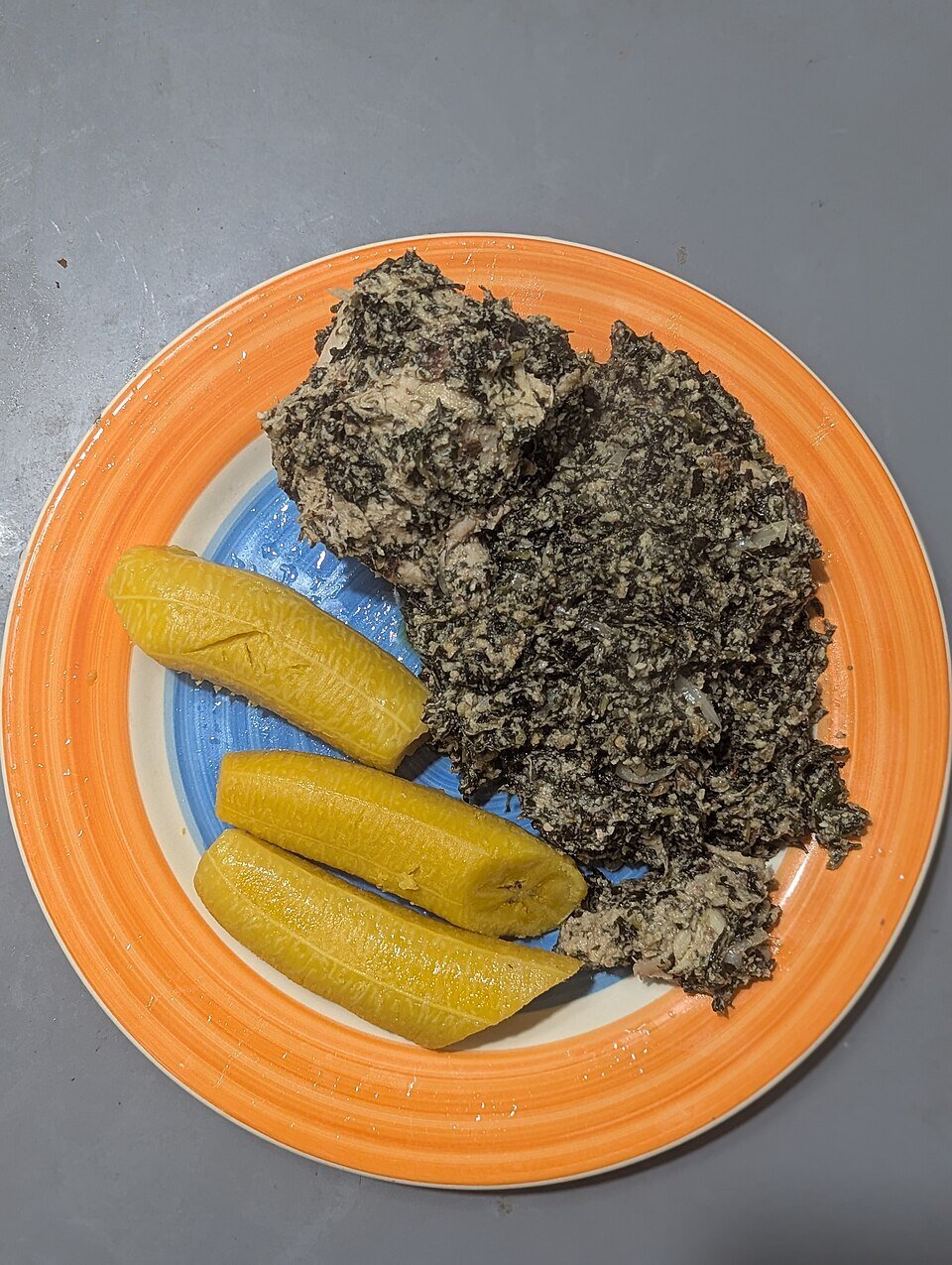
Photo : Wikimedia Commons (CC BY-SA)
Peanuts
Ground peanuts form the creamy, nutritious base of Ndolè sauce. Traditionally, raw peeled peanuts are boiled then pounded or blended into a paste. This peanut purée gives Ndolè its characteristic smooth texture.
Proteins
Traditional Cameroonian Ndolè typically combines two types of protein:
- Beef (in pieces, simmered until tender)
- Shrimp (jumbo, sautéed and added at the end)
Some variations also include smoked fish, stockfish (dried cod), or crayfish (dried shrimp).
Spices and Aromatics
- Yellow onion and red onion
- Garlic (6 cloves)
- Ginger (2 cm piece)
- Parsley (2 sprigs)
- Smoked crayfish (2 tablespoons)
- Chili pepper (optional)
Traditional Ndolè Recipe
Allow approximately 1 hour 30 minutes of preparation and cooking for an authentic result.
Step 1: Preparing the Bitter Leaves
- Rinse the leaves under cold water
- Remove the central stems
- Shred the leaves into strips
- Bring to a boil in a large pot for 10 minutes
- Transfer to a cold water bath
- Rub the leaves between your palms until the water turns completely white. Repeat 3 to 4 times
- Squeeze dry the leaves and set aside
Step 2: Cooking the Beef
- Finely chop 1/4 onion, parsley, 1 garlic clove, and 1 piece of ginger
- Mix this paste with the beef pieces, season with salt
- Sauté over medium heat for 10 minutes
- Add 350 ml of water and let simmer 20 to 25 minutes
Step 3: Preparing the Peanut Sauce
- Boil the peanuts for 7 to 10 minutes
- Blend the peanuts with 1/2 onion, ginger, and garlic — not too smooth
- Sauté 1/4 onion for 3 minutes, add the peanut paste and 120 ml of broth
- Simmer for 15 minutes, stirring regularly
Step 4: Final Assembly
- Season the sauce, add the bitter leaves and 120 ml of broth
- Mix well and let simmer 15 minutes
- Stir in the smoked crayfish and cook 5 minutes
Step 5: Shrimp and Finishing Touches
- Season and pan-sear the jumbo shrimp 1 to 2 minutes per side
- Fold the shrimp into the Ndolè
- Fry the red onion rings and pour over the Ndolè
- Let simmer 3 to 5 minutes before serving
What to Serve with Ndolè?
- Boiled ripe plantains — The classic pairing
- Foutou — Pounded plantains and yams
- White rice
- Mion Mion — Cassava balls
Looking for more African recipes? Check out our African section to discover more traditional dishes from the continent.
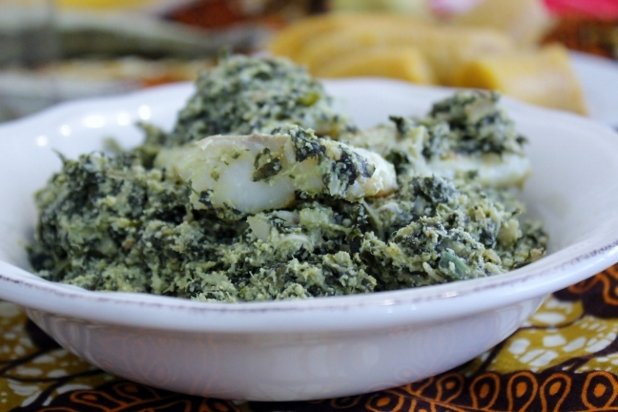
Photo : Wikimedia Commons (CC BY-SA)
Nutritional Benefits of Ndolè
- Complete proteins from the beef-shrimp combination
- Unsaturated fatty acids from peanuts
- Powerful antioxidants from bitter leaves (Vernonia amygdalina)
- Vitamins and minerals: iron, zinc, calcium, B vitamins
- Dietary fiber important for digestive health
FAQ: Everything You Need to Know About Ndolè
Can you make Ndolè without bitter leaves?
Yes, but it won’t be traditional Ndolè anymore. You can use fresh spinach or kale as a substitute — the taste will be different but the dish will still be delicious.
How long does Ndolè keep?
Ndolè keeps 3 to 4 days in the refrigerator. The flavors develop over time — it’s a dish that’s often better the next day.
Is Ndolè very spicy?
The traditional recipe isn’t particularly spicy. Add a scotch bonnet to the peanut blend if you like heat — otherwise, omit it entirely.
Where to find bitter leaves?
Frozen bitter leaves are available at specialized African grocery stores. They are also called “Bitterleaf” or “Ndoleh”.
Conclusion
Ndolè is much more than a recipe — it’s an immersion into the culinary soul of Cameroon. This legendary dish, prepared with love and patience, embodies everything that Cameroonian gastronomy has to offer. Whether you’re a Cameroonian from the diaspora or a curious food lover ready to discover new flavors, Ndolè definitely deserves a place in your culinary repertoire. Create your own tradition.
Photo credit : Kaboompics / Pexels