 (No Ratings Yet)
 Loading...
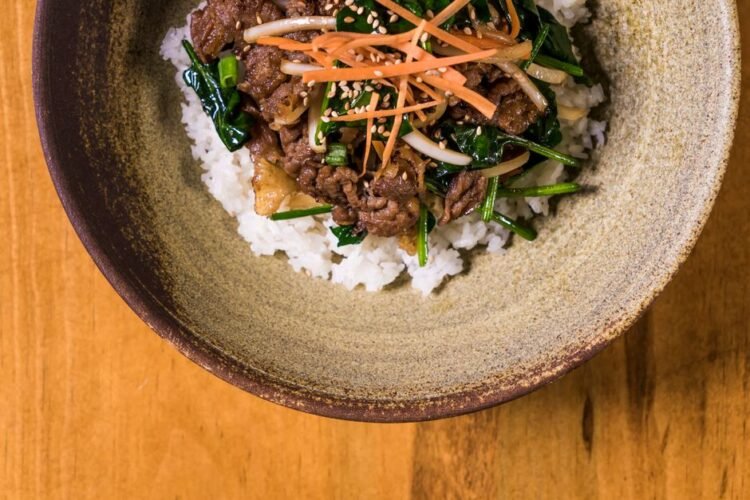
Jeonju is widely considered the birthplace of bibimbap, and this classic version is served in a regular metal or brass bowl with warm rice, an array of seasoned namul, finely chopped raw beef, and a vibrant gochujang sauce. Each bowl is built like a color wheel so every bite offers a different combination of textures and flavors, then mixed tableside.
Prep Time25 mins
Cook Time25 mins
Total Time50 mins
Servings4
Yield4 servings
Nutrition Facts
Per serving (estimated)
- 720 kcalCalories
- 28 gFat
- 7 gSaturated Fat
- 78 gCarbs
- 6 gFiber
- 9 gSugar
- 38 gProtein
- 890 mgSodium
- 920 mgPotassium
- 140 mgCalcium
- 7 mgIron
- 22 mgVitamin C
- 380 mcgVitamin A
Ingredients
For the rice
- 2 cups short-grain white rice
- 2 1/2 cups water
- 1 tsp toasted sesame oil
- 1/2 tsp fine salt
For the seasoned raw beef
- 8 oz (225 g) beef eye of round, very finely chopped by hand
- 2 tbsp soy sauce
- 1 tsp toasted sesame oil
- 1 tsp sugar
- 2 cloves garlic, finely minced
- 2 tbsp grated Asian pear
- 1/4 tsp freshly ground black pepper
- 1 scallion, finely sliced
For the seasoned vegetables
- 5 oz (140 g) fresh soybean sprouts
- 4 oz (115 g) baby spinach
- 1 small zucchini, julienned
- 1 medium carrot, julienned
- 4 fresh shiitake mushrooms, thinly sliced
- 1 cup rehydrated fernbrake (gosari), drained
- 2 tbsp neutral oil, divided
- 3 cloves garlic, minced
- 1 1/2 tsp fine salt, divided
- 2 tsp toasted sesame oil
- 1 tsp toasted sesame seeds
For the gochujang sauce
- 4 tbsp Korean gochujang
- 1 tbsp toasted sesame oil
- 1 tbsp sugar
- 1 tbsp water
- 1 tsp rice vinegar
- 1 tsp toasted sesame seeds
- 1 clove garlic, finely minced
For serving
- 4 large egg yolks
- 1 sheet roasted gim (seaweed), shredded
- Extra toasted sesame seeds
- Optional: 1 cup bean sprout soup or doenjang jjigae on the side
Directions
- Rinse the rice in cold water until the water runs clear, then combine with the 2 1/2 cups water and 1/2 tsp salt in a rice cooker or heavy pot. Cook until tender, then fluff and stir in 1 tsp sesame oil; keep warm.
- While the rice cooks, prepare the raw beef: toss the finely chopped eye of round with soy sauce, sesame oil, sugar, garlic, grated Asian pear, pepper, and scallion. Cover and chill at least 15 minutes so the pear can lightly cure the meat.
- Blanch the soybean sprouts in lightly salted boiling water for 2 minutes; drain, rinse briefly under cool water, and squeeze dry. Toss with 1/2 tsp salt, a pinch of garlic, and 1/2 tsp sesame oil. Repeat with the spinach: blanch 30 seconds, cool, squeeze very dry, then season with salt, garlic, and sesame oil.
- Heat 1 tbsp neutral oil in a skillet over medium-high heat and sauté the zucchini with a pinch of salt for about 2 minutes until just tender; transfer to a bowl. Repeat with the carrot, then the shiitake mushrooms, and finally the gosari, adding a touch more oil as needed and seasoning each batch lightly with salt and a finishing drizzle of sesame oil.
- Whisk the gochujang sauce ingredients together in a small bowl until completely smooth; set aside.
- To assemble, divide the warm rice among 4 wide bowls. Arrange the seasoned vegetables and the marinated raw beef in separate colorful mounds on top of the rice, working around the bowl like the spokes of a wheel. Sprinkle everything with the toasted sesame seeds.
- Slip a raw egg yolk into the center of each bowl and shower with the shredded gim. Serve right away with the gochujang sauce and a side of hot bean sprout soup.
- To eat, add a generous spoonful of gochujang sauce over the bowl, then mix vigorously with a spoon until the yolk breaks, the sauce colors everything red-orange, and the rice is evenly coated.
Cook’s Notes
- Keep the beef very cold and use a sharp knife to chop it; the texture should be finely minced but still distinct, not mushy like a paste.
- Authentic Jeonju bibimbap is traditionally served in a brass or stainless steel bowl rather than a stone pot, so the rice stays warm and fluffy instead of crisping.
- Source gochujang from a Korean market if possible – brands like CJ Haechandle or Sempio give a deeper, less candy-sweet sauce than supermarket jars.
- Blanch and season each vegetable separately; this prevents muddy flavors and keeps the colors bright against the white rice.
- For the full Jeonju experience, serve each bowl alongside a small cup of hot sagol guk (clear bone broth) or simple doenjang-jjigae to balance the rich sauce and egg.