 (No Ratings Yet)
 Loading...
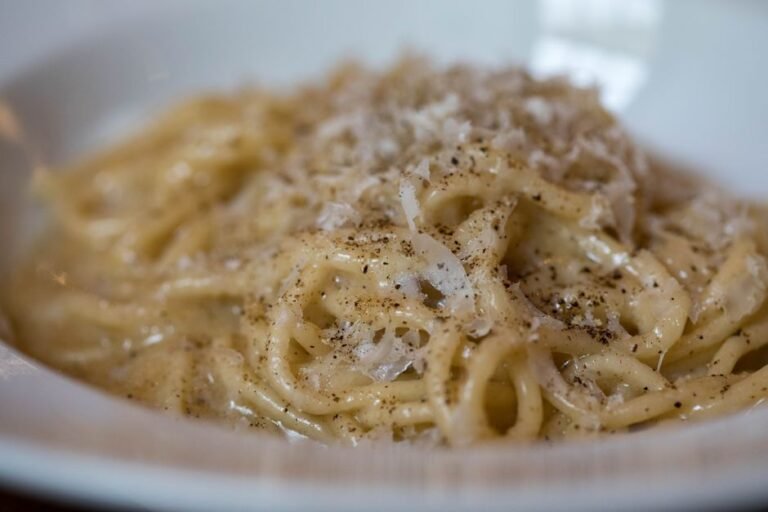
Spaghetti with Garlic and Olive Oil, known in its native Naples as Aglio e Olio, is the ultimate Italian weeknight pasta — five humble ingredients transformed by careful technique into something deeply satisfying. The trick is gentle heat to coax sweet, nutty flavor from the garlic without burning it, and a splash of starchy pasta water to emulsify the sauce into a silky coat that clings to every strand.
Prep Time10 mins
Cook Time15 mins
Total Time25 mins
Servings4
Yield4 servings
Nutrition Facts
Per serving (estimated)
- 640 kcalCalories
- 25 gFat
- 5 gSaturated Fat
- 85 gCarbs
- 4 gFiber
- 3 gSugar
- 18 gProtein
- 620 mgSodium
- 280 mgPotassium
- 90 mgCalcium
- 3 mgIron
- 6 mgVitamin C
- 55 mcgVitamin A
Ingredients
For the pasta
- 1 lb (450 g) spaghetti
- 2 tablespoons kosher salt, for the pasta water
For the garlic oil
- 1/3 cup (80 ml) good-quality extra-virgin olive oil
- 8 to 10 medium garlic cloves, very thinly sliced
- 1/2 to 1 teaspoon red pepper flakes, to taste
- 1/3 cup packed fresh flat-leaf parsley, finely chopped
For finishing
- 1 cup reserved pasta water, plus more as needed
- 1/2 cup finely grated Parmesan or Pecorino Romano cheese (optional)
- 1/2 teaspoon freshly cracked black pepper
- Flaky sea salt, to taste
Directions
- Bring a large pot of water to a rolling boil, add 2 tablespoons of kosher salt, and cook the spaghetti until al dente, stirring occasionally (about 8 to 9 minutes); reserve 1 cup of pasta water before draining.
- While the pasta cooks, combine the olive oil, sliced garlic, and red pepper flakes in a wide skillet (large enough to hold the pasta) over medium-low heat.
- Cook the garlic slowly, swirling the pan frequently, for 4 to 6 minutes until the slices turn pale golden and smell toasty — keep the heat low so the garlic sweetens rather than browns or burns.
- Add about 1/3 cup of the reserved pasta water to the skillet and bring to a gentle simmer, scraping up any golden bits from the bottom of the pan.
- Add the drained spaghetti to the skillet along with the chopped parsley, and toss vigorously with tongs for about 1 minute so the sauce emulsifies and coats every strand.
- Loosen with additional pasta water, a tablespoon at a time, if the sauce looks too tight; the finished dish should glisten, not pool with oil.
- Off the heat, add the cheese (if using) and black pepper, and toss once more until the sauce turns creamy and clings to the pasta.
- Taste and adjust salt, then divide among four warmed bowls, finishing each with a drizzle of olive oil, a pinch of flaky sea salt, and extra parsley.
Cook’s Notes
- Slice the garlic as evenly and thinly as possible so it cooks uniformly — uneven pieces will burn before the rest turn golden.
- Never let the garlic brown; as soon as it smells nutty and the slices are just turning pale gold, pull the pan off the heat, as residual warmth will keep cooking it.
- Use a wide, shallow pan rather than a deep pot so the oil and pasta form a thin layer that emulsifies quickly with the starchy water.
- Skip the cheese if you want the purest, most traditional Neapolitan version — purists argue the dish is meant to be a celebration of olive oil and garlic alone.
- Save a generous cup of pasta water before draining; this cloudy, salty starch is the secret to a sauce that actually clings to the noodles.