 (No Ratings Yet)
 Loading...
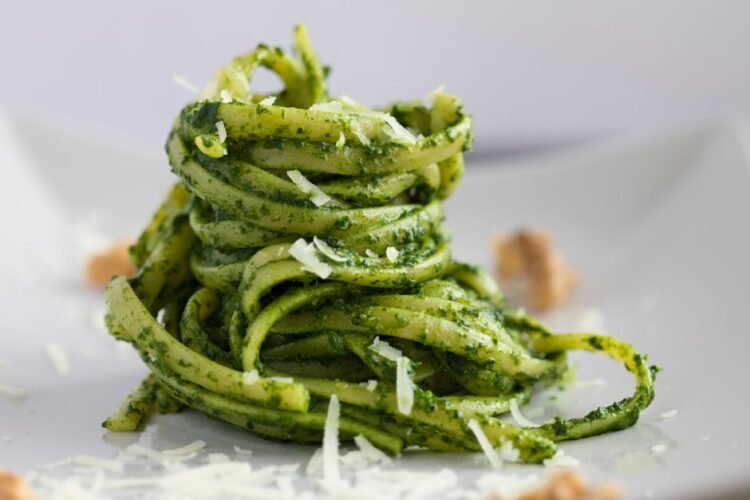
This classic dish from Liguria, Italy pairs bright emerald basil pesto with silky strands of linguine, finished with traditional potatoes and green beans for an authentic regional touch. The pesto is never cooked, just gently warmed by the pasta to preserve its fresh, herbaceous flavor.
Prep Time15 mins
Cook Time15 mins
Total Time30 mins
Servings4
Yield4 servings
Nutrition Facts
Per serving (estimated)
- 685 kcalCalories
- 34 gFat
- 8 gSaturated Fat
- 74 gCarbs
- 5 gFiber
- 4 gSugar
- 22 gProtein
- 520 mgSodium
- 480 mgPotassium
- 285 mgCalcium
- 3.5 mgIron
- 9 mgVitamin C
- 95 mcgVitamin A
Ingredients
For the basil pesto
- 3 cups packed fresh Genovese basil leaves (about 3 oz)
- 1/2 cup pine nuts, lightly toasted
- 2 medium garlic cloves, peeled and smashed
- 1/2 cup finely grated Parmigiano-Reggiano
- 1/4 cup finely grated Pecorino Sardo
- 1/2 tsp fine sea salt, plus more to taste
- 1/2 cup cold-pressed extra-virgin olive oil (preferably Ligurian)
- 1 tbsp unsalted butter, softened
For the pasta and vegetables
- 12 oz dried linguine or trofie
- 6 oz baby Yukon Gold potatoes, halved
- 6 oz haricots verts or thin green beans, trimmed
- 2 tbsp coarse sea salt for the pasta water
- Extra grated Parmigiano-Reggiano, for serving
Directions
- Bring 4 quarts of water to a rolling boil in a large pot. Add the coarse sea salt and drop in the baby potatoes; cook for 6 minutes, then add the green beans and cook another 3 minutes until just tender. Remove the vegetables with a slotted spoon and set aside.
- Add the linguine to the same boiling water and cook until al dente according to package directions, about 8-9 minutes. Reserve 1 cup of starchy pasta water before draining.
- While the pasta cooks, prepare the pesto: combine the basil leaves, toasted pine nuts, garlic, salt, and grated cheeses in a food processor. Pulse 4-5 times to coarsely chop, then with the machine running, slowly stream in the olive oil until a smooth but textured sauce forms. Stir in the softened butter for a silkier finish.
- If the pesto looks stiff, loosen it with 2-3 tablespoons of the reserved warm pasta water until it reaches a pourable, glossy consistency.
- Halve the cooked green beans into 1-inch pieces and quarter the potatoes. Add them to the drained pasta in a large warm serving bowl.
- Add the pesto to the bowl and toss vigorously with tongs, adding more reserved pasta water a splash at a time until the sauce clings evenly to every strand. Do not apply direct heat; the residual warmth of the pasta is enough to release the pesto's aroma.
- Taste and adjust salt. Serve immediately in warmed shallow bowls, topped with extra grated Parmigiano-Reggiano and a light drizzle of olive oil.
Cook’s Notes
- Never heat pesto directly on the stove; high temperatures dull the basil's color and turn the sauce bitter. Always toss it off the heat with warm pasta.
- For the most authentic texture, make the pesto by hand using a marble mortar and pestle, pounding in the order of garlic, pine nuts, basil, then cheese before emulsifying with oil.
- Choose small, tender basil leaves harvested from the top of the plant. Older leaves are more bitter and will overpower the delicate sauce.
- Toast pine nuts in a dry skillet over medium-low heat for 2-3 minutes until just fragrant; this single step dramatically deepens the pesto's nuttiness.
- A small knob of butter or a splash of the starchy cooking water helps the pesto cling to long pasta strands and prevents it from separating.